How Many Cryptocurrencies Should You Own? The Simple Portfolio Rule Most Investors Ignore
Is owning more cryptocurrencies actually safer? Not always. Learn how many coins belong in a well-balanced portfolio, why most investors over-diversify, and how to build a focused crypto portfolio designed to survive multiple market cycles.
How Many Cryptocurrencies Should You Own?
One of the most common questions in crypto isn't about which coin will become the next Bitcoin.
It's much simpler.
"How many cryptocurrencies should I actually own?"
If you've spent any time on YouTube, X, or Reddit, you've probably seen wildly different answers. Some investors proudly show portfolios with more than 50 coins. Others insist that Bitcoin is the only cryptocurrency worth owning.
Both extremes miss the point.
The right number of cryptocurrencies depends on your investment strategy, your ability to research projects, and your willingness to manage risk through multiple market cycles.
After investing through several bull and bear markets, I've noticed one pattern that repeats every cycle.
The investors with the biggest portfolios rarely achieve the biggest returns.
Instead, the best long-term investors own fewer assets, understand them deeply, and stick to a clear investment plan. Now, let's address...
The Biggest Myth About Crypto Diversification
Many investors believe that owning more cryptocurrencies automatically reduces risk.
It sounds logical.
If one coin fails, another might succeed.
But the problem is that most cryptocurrencies don't move independently.
During strong bull markets, almost everything goes up.
And during bear markets, almost everything goes down.
History has shown this repeatedly.
In 2018, many investors believed they had diversified portfolios because they owned dozens of altcoins. When the market collapsed, most of those projects fell by more than 90%. Some never recovered.
The same lesson appeared again after the 2021 bull market.
Many popular projects lost nearly all their value despite belonging to different sectors.
Owning twenty weak projects doesn't make your portfolio safer.
It simply spreads your mistakes across more charts.
Why Too Many Coins Become a Problem
Every cryptocurrency demands your attention.
You need to understand its technology, tokenomics, developer activity, roadmap, competitors, and market position.
Now imagine doing that for 30 different projects.
It's impossible for most investors.
Instead of making informed decisions, people begin relying on influencers, headlines, and social media sentiment.
That's when emotional investing takes over.
A smaller portfolio allows you to follow each project closely and make decisions based on conviction instead of noise. Now, here is what you actually need...
Focus on Quality, Not Quantity
Think of your crypto portfolio like a football team.
You don't need fifty players on the pitch.
You need the right players in the right positions.
Every cryptocurrency in your portfolio should have a clear purpose.
Before adding another coin, ask yourself:
What role does this asset play?
Does it offer something my current portfolio doesn't?
Would I still buy it if nobody on social media mentioned it today?
Am I replacing a weaker investment or simply adding more clutter?
If you can't answer those questions, you're probably collecting coins instead of building wealth.
So, How Many Cryptocurrencies Should You Own?
The truth remains, there's no universal number. But there are practical ranges that work for most long-term investors.
Conservative Investors: Three to Five Coins
If your goal is preserving wealth while participating in crypto's long-term growth, keeping your portfolio small often produces better results.
A simple portfolio might include:
Bitcoin as the foundation
Ethereum for smart contract exposure
One or two established altcoins
One higher-risk opportunity
This approach keeps research manageable while reducing unnecessary complexity. And it's part of what we reveal inside the Golden Buy Zone Blueprint.
Balanced Investors: Five to Eight Coins
This range gives you room to diversify across several sectors without losing focus.
For example, you could allocate your portfolio across:
Bitcoin
Ethereum
A leading smart contract platform
A decentralized finance project
An AI-related protocol
A real-world asset project
A higher-risk emerging opportunity
Each investment serves a distinct purpose rather than competing with the others. Again, this is perfect for cycle-based investors and helps us maintain a well-balanced, diversified portfolio. Find details inside the Golden Buy Zone Blueprint.
Aggressive Investors: Eight to Twelve Coins
Even investors with higher risk tolerance rarely need more than twelve carefully selected projects.
Beyond this point, most portfolios become difficult to manage.
Adding more coins doesn't necessarily increase your upside.
It often increases confusion. Next, let's discuss...
Why Bitcoin Should Remain Your Largest Position
One mistake I see repeatedly is investors treating Bitcoin like just another cryptocurrency.
It isn't.
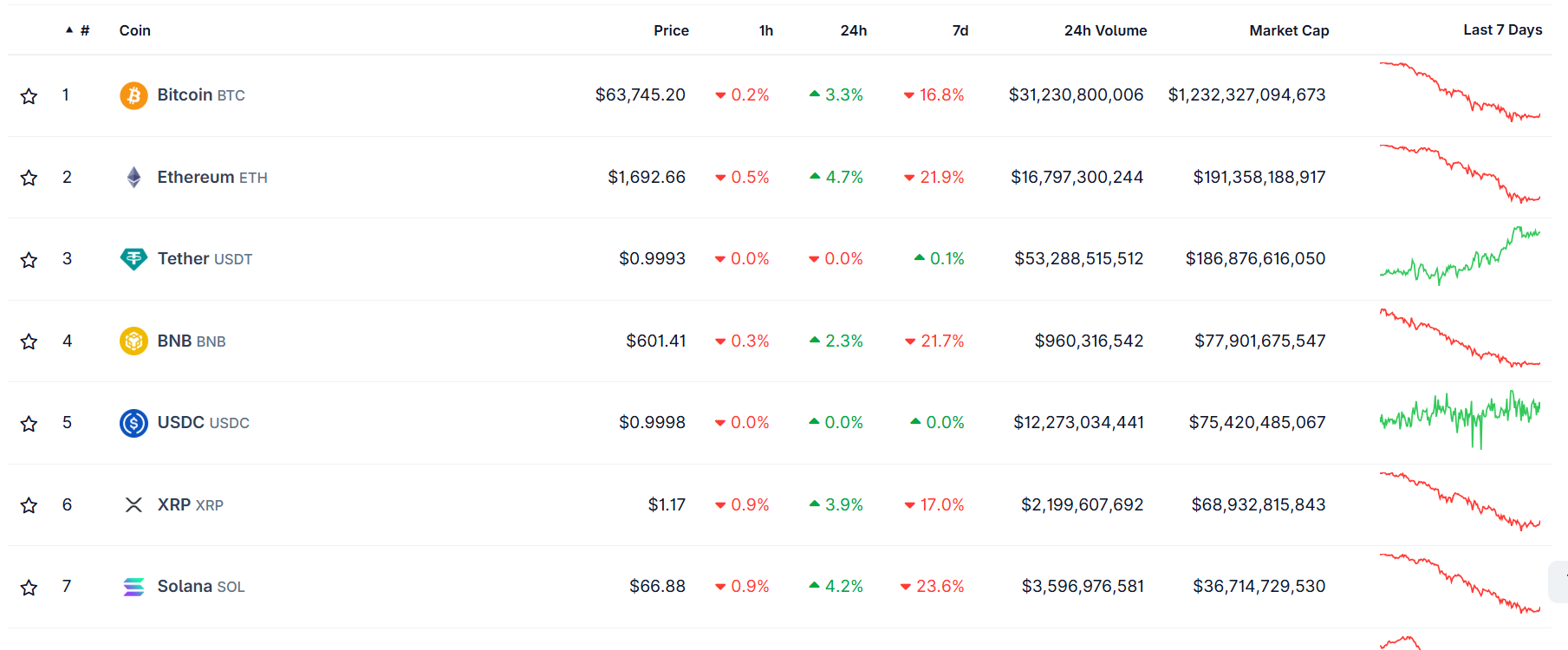
Bitcoin has remained resilient in this bear market, holding firmly above $40,000 and $50,000, a milestone many thought impossible before the 2021 all-time high. Yes, it has survived every major bear market in crypto's history.
But thousands of altcoins haven't.
That doesn't mean we should completely ignore altcoins.
Many outperform Bitcoin during certain stages of the cycle.
The key is understanding their role and using them to our advantage.
Remember this:
Bitcoin provides stability.
Blue-chip altcoins provide growth.
Smaller projects provide asymmetric upside.
But when those roles become blurred, your portfolio becomes vulnerable.
Now, let's address how to...
Avoid "Narrative Overload"
Look, my friend. Every cycle introduces new investment themes.
NFTs.
Artificial intelligence.
Gaming.
Layer 2 networks.
Real-world assets.
Decentralized infrastructure.
The list is endless, and each narrative creates excitement, and each promises to reshape the future of crypto.
Here's the problem with investing based solely on narratives. You're tempted to buy several projects in each category.
If you follow that path, you'll ruin your portfolio. Before long, it will contain multiple AI tokens, several Layer 1 blockchains, four meme coins, and a collection of projects you barely remember buying.
Instead of asking whether a narrative is exciting, ask whether you already have enough exposure to it.
You see, owning one strong project often makes more sense than owning five similar ones. You can reread that and apply it to your portfolio right away.
A Simple Portfolio Audit
If you're unsure whether your portfolio has become too large, answer these questions honestly.
Can you explain each project's value proposition in one minute?
Do you know why you bought every coin you own?
Have you reviewed each project's progress in the past three months?
Would you buy every holding again today at current prices?
If you answered "no" to several of these questions, your portfolio may need simplifying.
Here's the thing. Selling weaker positions isn't admitting failure.
It's making room for stronger opportunities.
This is why we carefully selected six altcoins and pinpointed their potential buy zones using the Golden Buy Zone Blueprint. Download the guide today to build a strong, profitable bull run portfolio.
Your Portfolio Should Match Your Strategy
Your portfolio isn't supposed to impress people online.
It's supposed to help you reach your financial goals.
If you're a long-term, cycle-based investor, simplicity often wins.
Fewer positions make it easier to research thoroughly, manage risk, rebalance with confidence, and stay disciplined when emotions run high.
The goal isn't to own every promising cryptocurrency.
The goal is to own the right ones for the right reasons.
That's how portfolios survive bear markets and arrive prepared for the next bull run.
If you're ready to take the next step, read my complete guide, "How to Build a Bear Market-Proof Crypto Portfolio." Inside, I break down the Three-Tier Portfolio Framework, explain how to allocate between Bitcoin and altcoins, and share the exact process I use to build a portfolio that can weather multiple market cycles.