Crypto vs. Artificial Intelligence: Where Should Growth Investors Allocate Capital?
Key Takeaways
Capital Velocity vs. Monetization: AI equities offer immediate, massive enterprise revenue growth backed by capital expenditure, while crypto provides liquid, censorship-resistant networks with asymmetric upside and lower cash flow visibility.
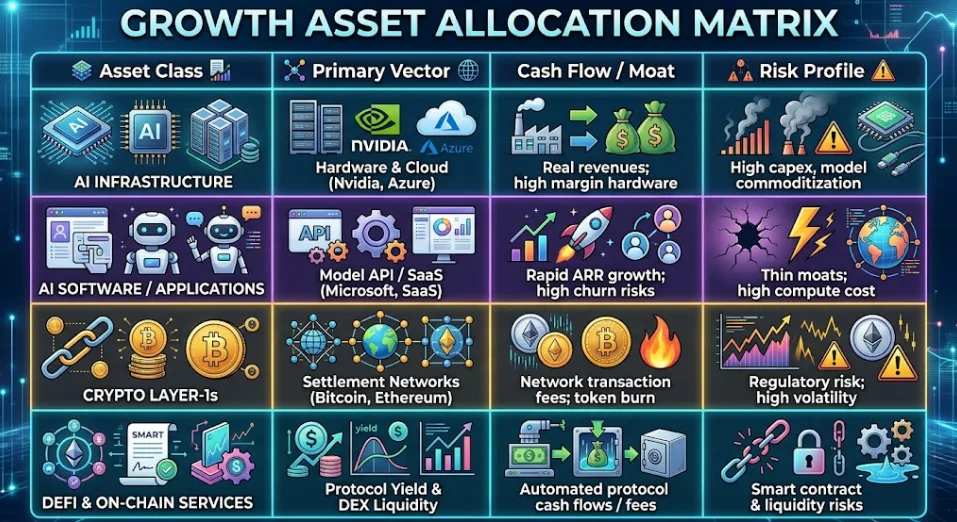
Infrastructure Plays Dominate: The safest vector for AI growth is the compute, hardware, and data-center layer, whereas crypto allocations center on Layer-1 settlement networks and decentralized finance protocols.
The "Golden Buy Zone" Strategy: Growth investors can maximize risk-adjusted performance by splitting capital into core liquid assets, structural picks, and asymmetric moonshots based on market valuation metrics.
Regulatory and Capex Risk: AI faces immense infrastructure capex and model commoditization risks; crypto continues to navigate global regulatory frameworks and liquidity cycles.
Crypto vs. Artificial Intelligence: Where Should Growth Investors Allocate Capital?
To succeed in learning how to invest in Artificial Intelligence (AI), focus on building direct exposure through semiconductor manufacturers, cloud infrastructure providers, and hyperscalers that monetize actual enterprise compute. Growth investors should balance this equity exposure against liquid cryptocurrency assets by evaluating cash flows, risk-adjusted returns, and capital efficiency.
Tech investors face a classic capital allocation dilemma. Generative AI is reshaping enterprise productivity at a pace unseen since the internet's early days, while decentralized crypto assets offer global, borderless financial infrastructure. Choosing where to deploy your next dollar requires a clear comparison of cash flows, liquidity schedules, and risk profiles.
Click here to learn more about the Crypto Buy Zone Blueprint.
Key Differences: Venture AI Equities vs. Decentralized Crypto Assets
Evaluating AI equities alongside crypto requires looking beyond raw price performance. The underlying economic models dictate how capital behaves during market contractions.
How to Invest in AI: The Structural Growth Playbook
Learning how to invest in AI starts by dividing the value stack into three distinct layers: hardware/infrastructure, platform/hyperscalers, and end-user applications.
1. Hardware and Compute Infrastructure
The hardware layer is the most defensible segment of the AI ecosystem. Semiconductor designers and equipment manufacturers generate reliable revenues regardless of which consumer AI application wins market share.
Semiconductors & Equipment: Enterprise allocations begin with companies producing custom silicon, GPUs, and advanced lithography machines. High barriers to entry protect profit margins.
Data Center & Power Infrastructure: Frontier AI models consume massive electrical capacity. Investing in nuclear energy producers, grid modernization companies, and specialized data-center REITs provides exposure to compute growth.
2. Hyperscalers and Cloud Platforms
Big-tech platforms finance the expansion of foundation models. These companies combine core enterprise software cash flows with AI API monetization.
Cloud Providers: Major cloud vendors capture margin by renting compute capacity to enterprises building AI workflows.
Distribution Advantage: Established software giants integrate AI tools directly into existing enterprise suites, converting free users into paid subscribers without incurring heavy acquisition costs.
3. Application and Specialized Software Layers
The top of the stack features rapid revenue growth alongside low customer switching costs.
Look for enterprise software providers with proprietary, domain-specific data sets.
Avoid thin wrapper apps that depend on third-party foundational model APIs, as open-source model improvements can quickly erode their functionality.
Strategic Execution Note: Deploying capital into AI equites after extended rallies can lower long-term risk-adjusted returns. To optimize entry points, growth investors use the Golden Buy Zone Blueprint. This framework identifies structural pullbacks—such as when megacap tech equities trade below historical valuation multiples—to build high-conviction positions without chasing peak valuations.
"OpenAI's GPT-3 May Be the Biggest Thing Since Bitcoin"
The idea that "OpenAI's GPT-3 may be the biggest thing since Bitcoin" is one of the hottest discussions today. It highlights a fundamental shift in technological inflection points. Early discussions on developer forums drew direct parallels between the network effects of open monetary protocols and foundational intelligence models. Indeed, both technological shifts create new economic models, but their scaling mechanics differ significantly.
Viral Adoption Cycles: Bitcoin achieved global scale through decentralized incentive structures without a centralized marketing budget. OpenAI's ChatGPT set consumer adoption records by offering an immediate, intuitive interface powered by massive centralized infrastructure.
Infrastructural Friction: Crypto scales through peer-to-peer software updates and validator consensus. AI scales through physical capital expenditure—requiring real-world data centers, specialized cooling, and gigawatt-scale power installations.
Monetization Realities: While Bitcoin acts as a non-sovereign monetary asset, foundation models operate as paid infrastructure services, generating subscription and usage revenues from day one.
"Microsoft Is Investing $1B in OpenAI"
When news broke that "Microsoft is investing $1B in OpenAI", it marked the start of the modern corporate AI venture model. This initial commitment evolved into a multi-billion-dollar strategic partnership, offering a clear blueprint for how legacy tech giants secure platform dominance.
The corporate venture playbook highlights key dynamics for growth investors:
Compute-for-Equity Swaps: Large tech platforms invest capital that flows back into their own cloud infrastructure, driving core cloud revenue while securing equity in frontier labs.
Distribution Pipelines: Startup AI labs gain access to enterprise sales channels overnight, bypassing traditional multi-year enterprise sales cycles.
Public Equity Proxy Trades: Retail investors unable to access private AI venture rounds can buy shares in strategic partners, turning mega-cap tech stocks into liquid proxies for private AI startups.
Portfolio Integration: When the crypto market experiences broad-market corrections, the Golden Buy Zone Blueprint helps investors identify strategic accumulation zones. Click the link below to get started.
How to Invest in Cryptocurrency: Risk, Liquidity, and Execution
To understand how to invest in cryptocurrency, focus on liquid, base-layer monetary assets and cash-flowing protocols while managing systemic volatility.
Focus on Layer-1 Settlement Networks: Allocate the core of a crypto portfolio to established networks like Bitcoin and Ethereum. These networks function as digital reserve assets and global settlement layers, backed by strong decentralization and liquidity.
Evaluate On-Chain Fundamentals: Analyze protocol revenue, daily active addresses, and total value locked (TVL) rather than relying on social sentiment. Look for projects that generate real protocol fees and distribute revenue to token holders or burn token supply.
Use Cold Storage and Self-Custody: Secure long-term holdings using hardware wallets to avoid the counterparty risks associated with centralized exchanges.
Implement Rebalancing Schedules: Crypto assets experience extreme volatility. Rebalance systematically by trimming outperforming tokens during market expansions and reallocating capital into core holdings or stablecoins.
Portfolio Strategy: How to Balance AI and Crypto Assets
Growth investors do not need to pick a single winner between AI and cryptocurrency. Combining both asset classes creates a portfolio that balances liquid monetary hedges with capital-efficient technology exposure.
Implementing the Allocation Framework
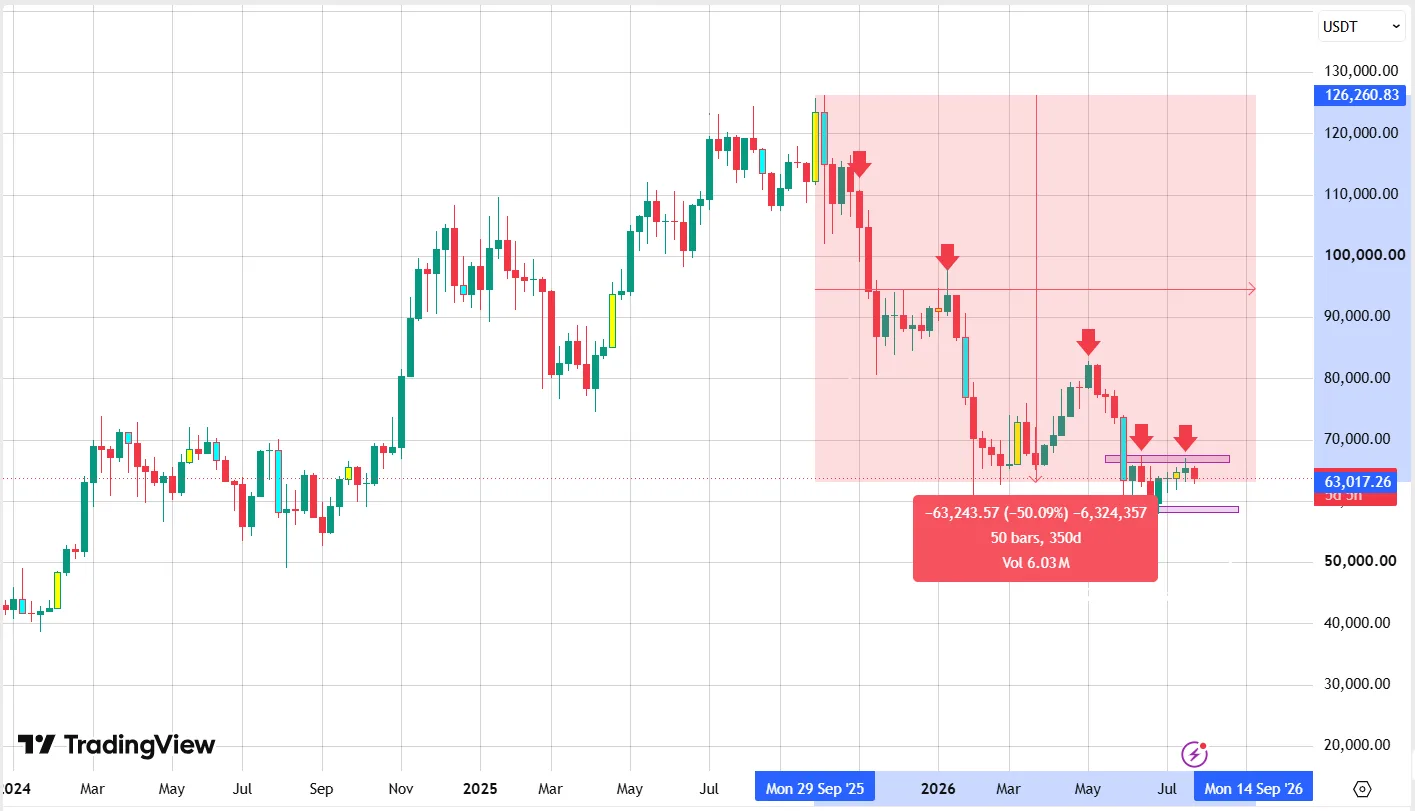
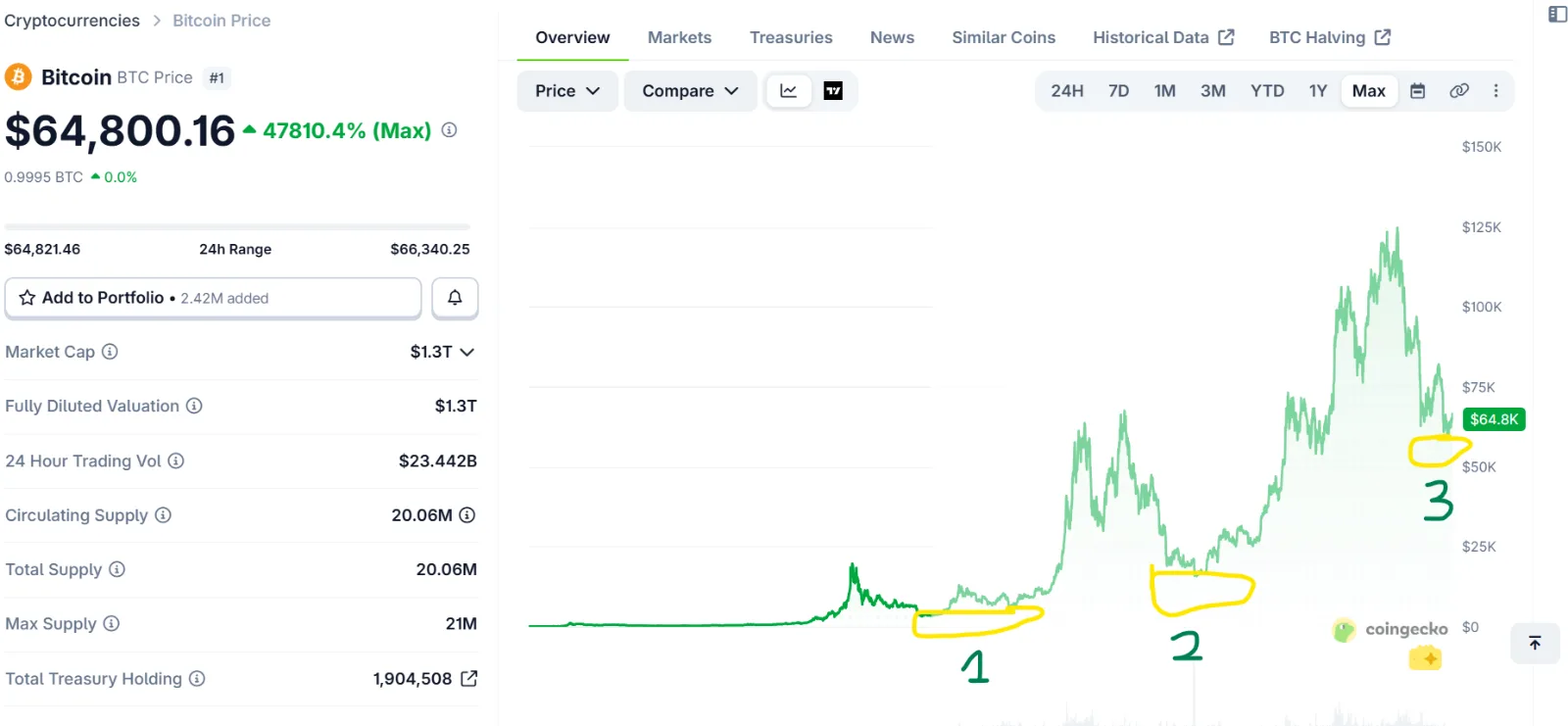
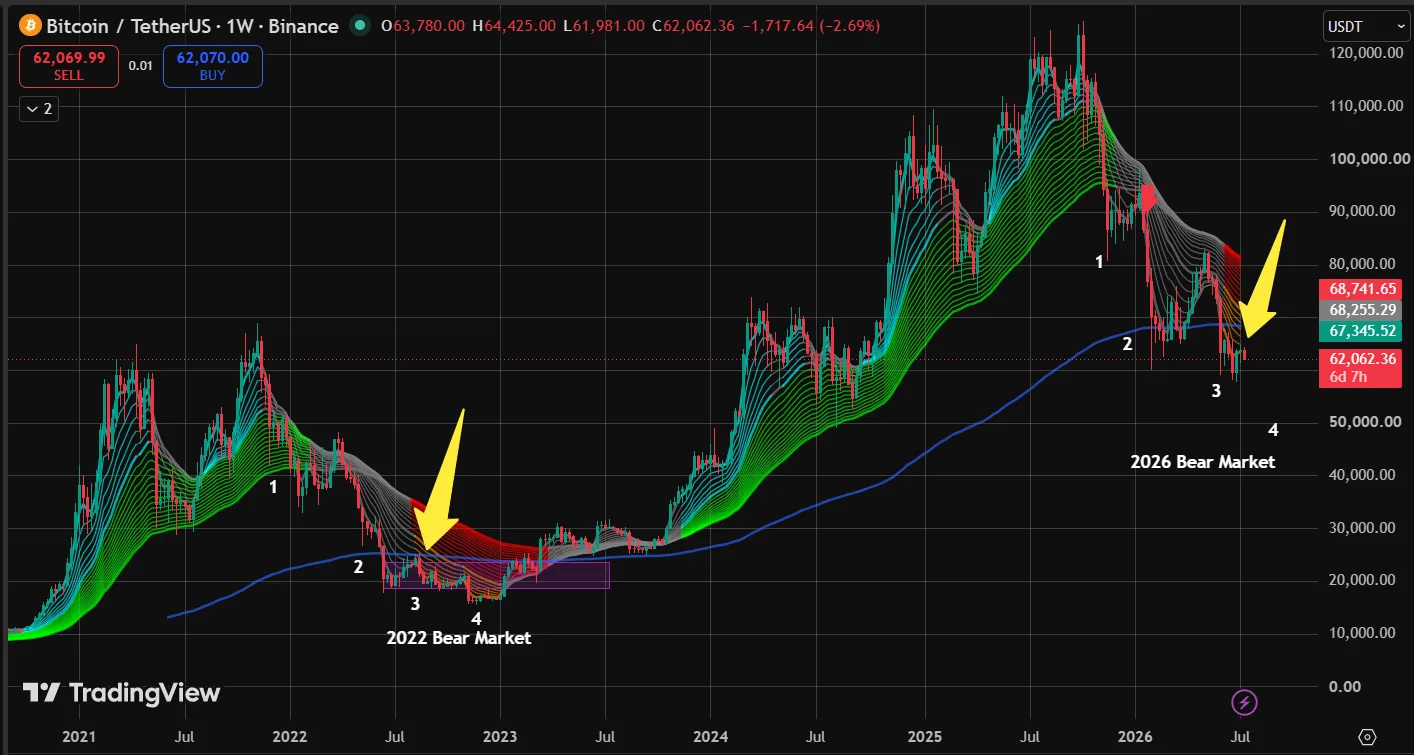
Apply the Golden Buy Zone Blueprint: Establish clear buy targets based on market valuation metrics. Accumulate crypto assets during extended bear markets when sentiment hits multi-year lows, and buy AI equities when broad tech pullbacks compress price-to-sales ratios.
Match Liquidity Needs: Match liquid crypto positions with public tech stocks. Avoid locking up excess capital in illiquid venture funds unless you have a multi-year horizon and can manage extended lockup periods.
Rebalance Periodically: Rebalance semi-annually or when an individual asset class strays more than 5% from its target allocation weight.
Frequently Asked Questions
Is AI or crypto a better investment for growth?
AI equities offer clearer near-term revenue growth driven by corporate software spending and data-center demand. Crypto assets provide higher liquidity, global accessibility, and asymmetric upside as monetary hedges and decentralized financial infrastructure.
How do I start investing in AI with a small budget?
Start by purchasing fractional shares of public tech ETFs or semiconductor index funds. This offers diversified exposure to GPU manufacturers, cloud infrastructure providers, and software platforms without requiring large capital outlays for single stocks or private venture deals.
What are the main risks of investing in AI companies?
The primary risks include high capital expenditure requirements, potential model commoditization, and intense competition among software providers. Rapid developments can quickly render proprietary models obsolete, eroding profit margins for consumer applications.
How do crypto and AI technologies intersect?
Crypto and AI intersect through decentralized compute networks, zero-knowledge proofs for verifying model outputs, and autonomous AI agents using blockchain rails for permissionless, micro-value payments.
Click Here to Learn More About the Golden Buy Zone Blueprint.