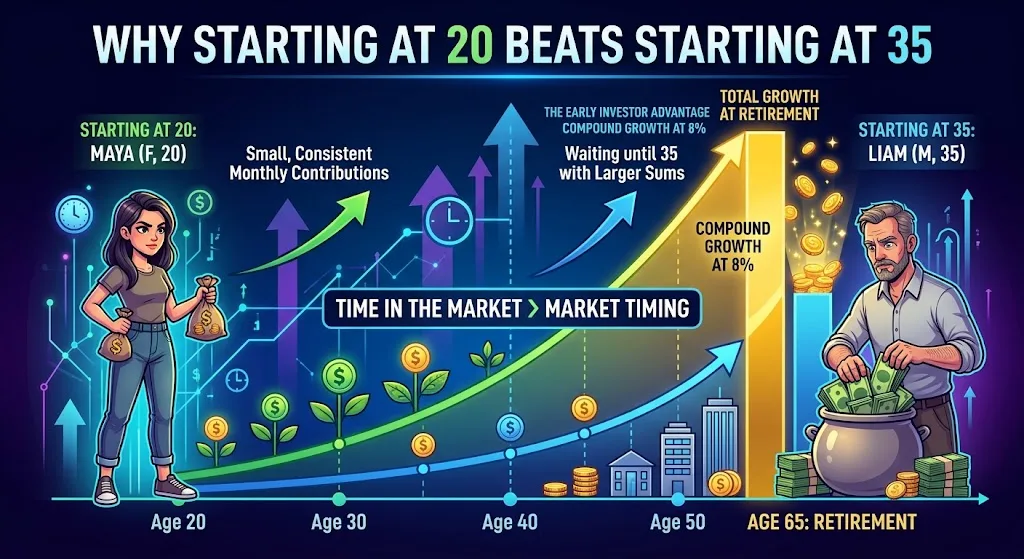
Dollar-Cost Averaging in a Bear Market: The Step-by-Step System That Removes Emotion
Every crypto investor knows they "should DCA." But knowing and doing are two different things — especially when the market is bleeding, and every headline screams disaster. This guide gives you the exact step-by-step system that replaces gut-feel decisions with a repeatable, emotion-proof framework for building real wealth across Bitcoin's market cycles.
Dollar-Cost Averaging in a Bear Market: The Step-by-Step System That Removes Emotion
You already know you should dollar-cost average. Everyone in crypto does.
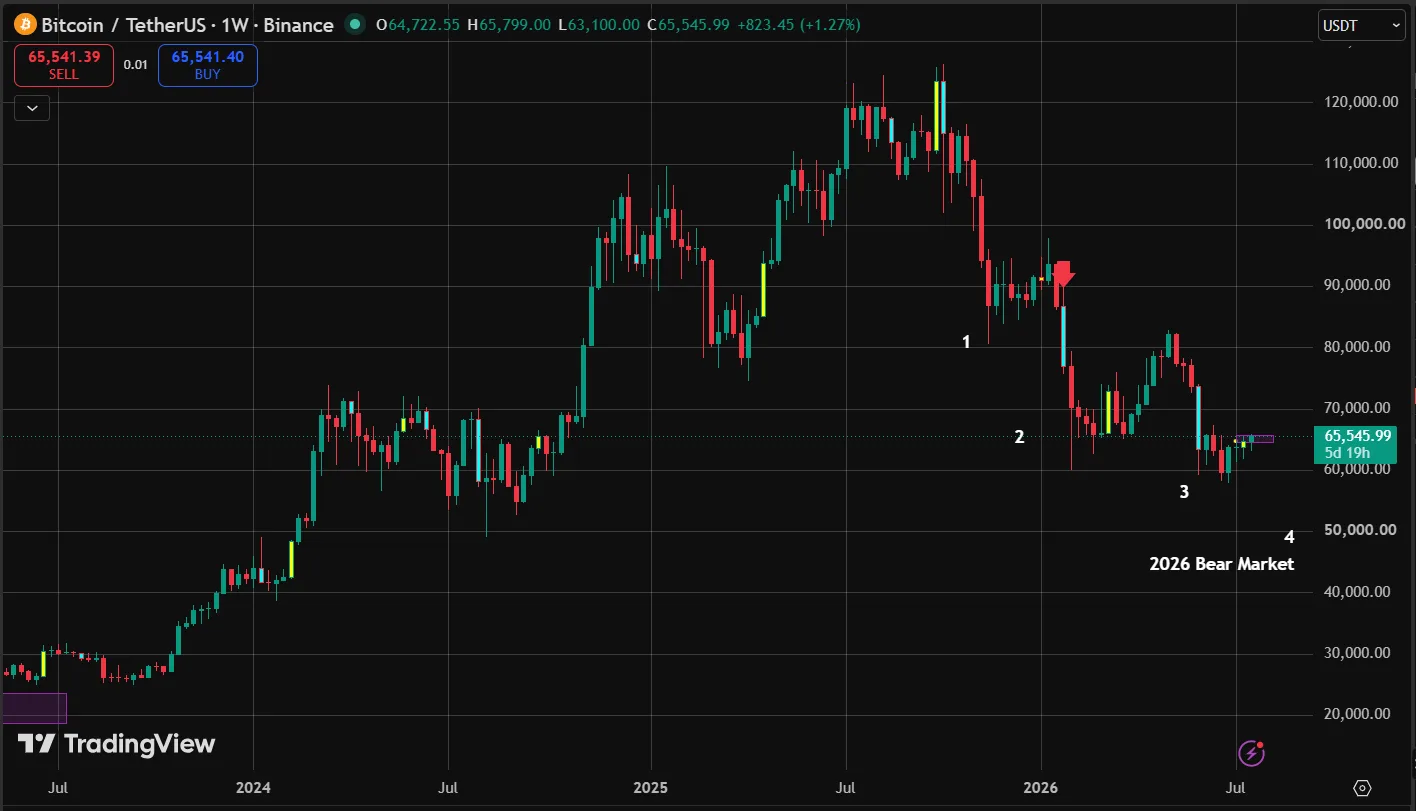
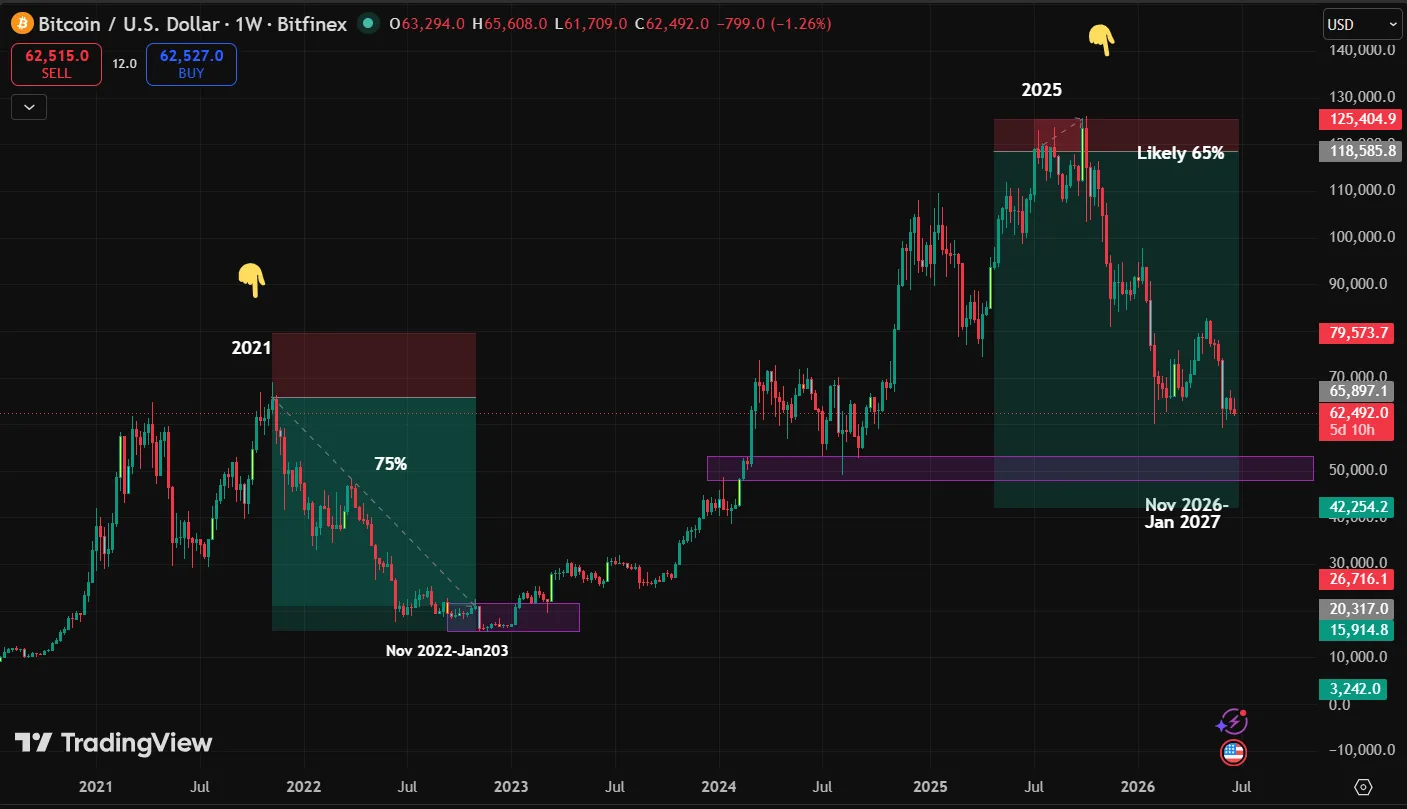
So why is it so hard to actually stick to it when Bitcoin drops 50% in three months and every chart looks like a cliff? See the BTC/USD weekly chart below.
The honest answer isn't discipline. It's that "DCA" without a system is just an idea — and as you know, ideas collapse under pressure. What you need isn't more motivation. You need a written, decision-by-numbers framework that makes the right action automatic, even when your emotions are screaming at you to stop.
That's what this guide builds, step by step. You can learn more inside our Golden Buy Zone Blueprint for cycle-based investors. First, let's begin with...
Why "Just DCA" Is Advice That Fails People
Browse any crypto forum during a bear market, and you'll find the same exchange playing out in thousands of threads: someone panicking about their portfolio, asking what to do — and a chorus of replies saying "just HODL and DCA, bro."
It's technically correct. And almost completely useless.
The reason: DCA without structure leaves every decision open. You need to factor in.... How many coins to buy per week. Do you buy more when the price drops another 20%? Do you pause if you think it's going lower? What if you run out of capital and there are still months of bear market ahead?
Each unresolved question can feel like a trap when you find yourself awake at midnight watching your portfolio value decline rapidly. Without a predetermined plan, you start to improvise. Unfortunately, improvised decisions in a bear market often lead to doing nothing or, even worse, selling your investments.
A 2025 survey by CoinGecko confirmed this pattern: 63% of crypto investors who started a DCA plan abandoned it within six months, with the majority citing "the price kept falling" as their reason. The cruel irony is that a falling price is precisely when DCA is doing its job — buying you more Bitcoin for the same dollars. Stopping it at that point is like turning off a superpower.
The fix isn't more willpower. It's a system that eliminates the decisions.
What the Data Actually Says About DCA in Bear Markets
Before building the system, it helps to understand why it works — not in theory, but in hard numbers.
From the 2022 bear market: Investors who maintained weekly Bitcoin DCA through the full collapse — from $47,000 down to $15,500 — achieved an average cost basis of roughly $24,200, according to Glassnode data. Bitcoin's price heading into 2024 was nearly four times that number.
From a five-year backtest (2021–2026): A $250 weekly Bitcoin purchase starting January 2021 resulted in $67,500 invested over five years and a portfolio worth approximately $120,518 at mid-2026 prices — a $53,000 gain despite Bitcoin's current bear market correction. The investors who DCA'd through the crash own that result.
The fear-based edge: Wallets that initiated weekly DCA during sub-20 Fear & Greed Index readings between 2018 and 2025 achieved a median cost basis 34% below the subsequent cycle peak. As of mid-2026, with Bitcoin around $62,000 and the Fear & Greed Index still in fear territory following a 50% drawdown from the October 2025 all-time high of $126,000, the BTC/USD weekly chart suggests the same setup is forming again.
The math doesn't care about your feelings. But your behavior does. That's what this system is designed to protect. Now, let's address...
The 5-Step DCA Bear Market System
This is a rules-based framework. The point is that every decision gets made once, in advance, so you never have to make it again during a panic.
Step 1: Set Your "Survive-Anything" Base Amount
Your base DCA amount must pass a single test: can you sustain it for 24 months even if Bitcoin falls another 50% from here, you lose your job, or an unexpected expense hits?
If the answer is no, the amount is too high. Cut it until the answer is yes.
This number is the floor of your system. It runs no matter what — automatically, on schedule, non-negotiable. Think of it like a utility bill. You don't decide each month whether to pay it. It just runs.
Practical starting points: $25–$50/week for beginners; $100–$250/week for investors with dedicated crypto allocation. Consistency outweighs size — research from CoinGlass confirms daily DCA outperforms monthly by only 5.6 percentage points over five years. Frequency matters far less than never stopping.
Action: Set up an automated recurring buy on your exchange today. Coinbase, Binance, Kraken, and Bybit all support this natively. Automate it. Remove the manual trigger entirely.
Step 2: Choose Your Frequency — Then Never Change It Based on Price
Weekly is the sweet spot for most investors: it smooths your cost basis better than monthly without the fee drag of daily purchases. Bi-weekly (aligning with your pay cycle) works equally well and is arguably easier to sustain.
The critical rule: your frequency is decided once and never adjusted based on where Bitcoin's price is. Not when it's crashing. Not when it looks like it might go lower. Not when a macro analyst on Twitter says "wait for $40K."
The moment you start adjusting your schedule based on price predictions, you've stopped DCA and started trying to time the market in slow motion. Same mistake, slower failure.
Step 3: Build a Tiered Boost Layer (Cycle-Aware Accumulation)
Here's what separates a sophisticated DCA system from a beginner's one — and what most guides skip entirely.
Your base DCA runs constantly. But on top of that, you pre-define specific conditions under which you deploy extra capital. These are not emotional decisions. They're rules you write before the market moves.
A practical tiered boost framework:
The Mayer Multiple (Bitcoin's price divided by its 200-day moving average) is a simple, well-researched signal. When it drops below 1.0, Bitcoin is historically cheap relative to its own trend. Below 0.85 — as it sat at 0.84 on July 5, 2026 — it has marked some of the best long-term accumulation windows in Bitcoin's history.
Critical rule: Set aside a fixed "boost reserve" — a separate pot of capital you do not touch except when these triggers fire. If it never fires, you keep the cash. If it fires multiple times, you deploy in order. You never exceed what's in the reserve. This prevents the most common error of over-investing at the wrong time: deploying boost capital too early, then having nothing left when prices fall further.
Step 4: Write Your "I Will Not" Rules — Before You Need Them
This step sounds unnecessary until the moment it saves you from a catastrophic decision.
Before the market gets worse, write down the following — literally, in a document or note on your phone:
I will not stop my recurring DCA purchase regardless of Bitcoin's price.
I will not sell any holdings while the Fear & Greed Index is below 30.
I will not make any unplanned purchases based on influencer calls or social media.
I will not adjust my strategy until I have held it for a minimum of 12 months.
These are your circuit breakers for emotional decisions. Read them before you do anything reactive. The investors who underperform don't have worse strategies — they have worse behavior at critical moments. Pre-committed rules transform behavior from reactive to automatic.
Step 5: Set a Cycle Exit Trigger — Not a Price Target
Long-term DCA investors don't just need a system for accumulating. They need to know when to gradually shift from building to protecting.
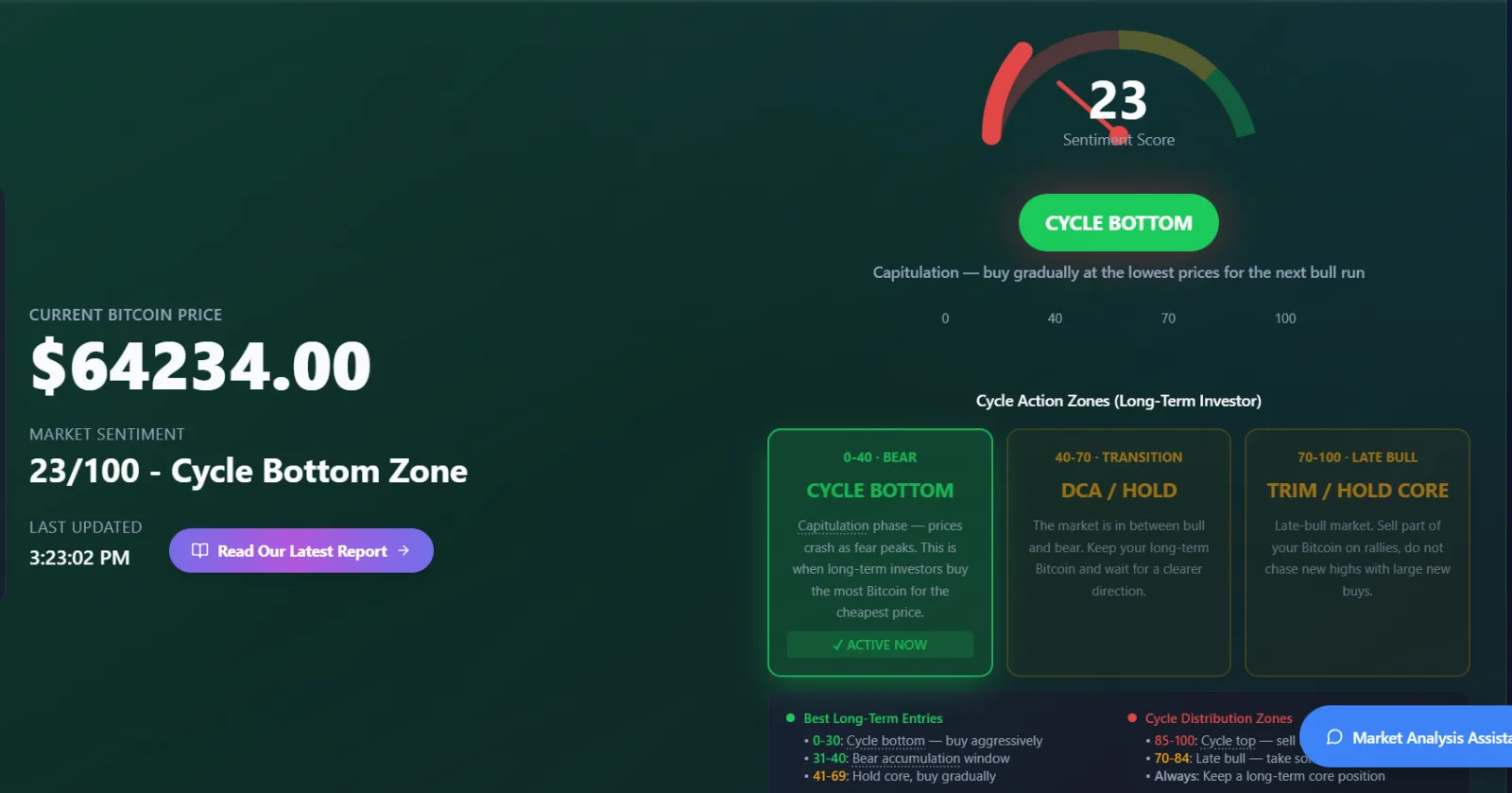
Here's where the Bitcoin Timing Model becomes critical. Rather than picking a price you "think" is the top (spoiler: nobody can), you use objective signals to guide your transition from accumulation mode to distribution mode.
Classic transition signals to watch for:
- MVRV Ratio above 3.5: The market is in overheated territory historically associated with late-cycle tops.
- Fear & Greed Index above 85 for multiple weeks: Euphoria phase, historically a distribution window.
- Bitcoin Timing Model: BTM has a sentiment score above 80%.
- Retail search volume spike: When friends who have never owned Bitcoin start asking you how to buy, the distribution phase is typically already underway.
The exit isn't a single moment. It's a gradual reduction — trimming 10–20% of your position each time a signal fires, not a single all-out sale. This prevents the biggest regret most investors carry: selling too early in a bull market because they tried to call an exact top.
The Psychological Edge: Why a System Beats Willpower Every Time
The reason most DCA investors fail isn't strategy — it's that they're asking themselves to make the hardest investment decision (keep buying into red) at the exact moment their emotions make it feel most wrong.
Markets are designed to transfer wealth from emotional participants to systematic ones. The bear market you're living through right now is the mechanism. Prices fall until emotional investors sell. Prices recover because patient accumulators hold and keep buying.
Every week you execute your base DCA in a bear market, you are on the right side of that transfer — even if it doesn't feel like it yet.
The system in this guide doesn't ask you to feel confident about Bitcoin's future. It asks you to trust the math, the rules you pre-set, and the 14-year track record of a market that has produced a new all-time high after every bear phase it has ever experienced.
Your Bear Market DCA Checklist
Before you close this article, complete these steps:
- Calculate your survive-anything base amount
- Set up automated recurring buy on your exchange
- Write down your three boost tier triggers and set aside your boost reserve
- Write your five "I will not" rules and save them somewhere visible
- Identify which cycle signals will tell you when to begin shifting from accumulation to distribution
- Set a calendar reminder to review (not change) your system every 90 days
Final Word: The Bear Market Is the Strategy
Every investor who will share impressive Bitcoin portfolio screenshots in 2028 is building that result right now — quietly, automatically, while the headlines are still negative.
You don't need to feel good about buying into a bear market. The system runs whether you feel good or not. That's the whole point.
Set the system up. Automate the base. Pre-define the boosts. Write the rules. Let the math work.
The bear market isn't something to survive. For long-term, cycle-aware investors — it's the strategy.
Want to learn more about crypto cycle-based investing? Click here.
This article is for educational purposes only and does not constitute financial advice. Cryptocurrency investments carry significant risk, including the potential loss of principal. Past market cycles do not guarantee future results. Always invest only what you can afford to lose and consult a qualified financial professional before making investment decisions.
Related Posts:
How Many Cryptocurrencies Should I Own?
How to Build a Profitable Portfolio that Survives Bear Markets.