The Liquidity Concept for Bitcoin Day Traders: Stop Being the "Target" and Start Trading Like Smart Money
In this guide, I outline a detailed step-by-step process for mastering the Liquidity trading concept and how to apply it to your daily trading routines to become a profitable cryptocurrency day trader.
The Liquidity Concept for Bitcoin Day Traders: Stop Being the "Target" and Start Trading Like Smart Money
Have you ever entered a trade, watched the price hit your stop loss, and then immediately skyrocket in the direction you predicted? It feels like the market is personally out to get you. The truth is, the market isn't a person, but it does need "fuel" to move—and that fuel is often your money.
In this guide, we are going to master the Liquidity Concept for Bitcoin Day Traders so you can stop being the victim and start following the "Smart Money." We will cover how to spot liquidity zones, why big banks need you to lose, and the exact step-by-step strategy to enter trades right before the big moves happen. By the end of this article, you’ll understand how to use liquidity as a magnet to predict where Bitcoin is headed next.
Now, You May Ask:
What is the liquidity concept in crypto trading? It is the idea that price moves toward areas where there are many pending buy or sell orders (like stop losses) to "fill" the needs of big institutional traders.
What is the liquidity of Bitcoin? It refers to how easily Bitcoin can be bought or sold without causing a massive, unexpected change in its price. Because Bitcoin is so popular, it has very high liquidity.
Is Bitcoin day trading profitable? It can be highly profitable, but only if you have a mechanical strategy and understand that for every winner, there is a loser.
Can you do day trading on Bitcoin? Yes! Because Bitcoin trades 24/7 and has high volatility, it is one of the most popular assets for day traders worldwide. Now, let's dive in deeper...
What Exactly is Liquidity? (The "Secret Fuel" of the Market)
Most "trading gurus" try to make liquidity sound like a complex math equation. It isn't. At its heart, trading is a Zero-Sum Game. This means that for you to win $100, someone else has to lose $100. For every buyer, there must be a seller.
And if you want to buy 1 Bitcoin, you need to find someone willing to sell 1 Bitcoin to you. For a small trader (a "retail trader"), finding a seller is easy. But imagine you are a giant bank or a "Smart Money" institution. If you want to buy $100 million worth of Bitcoin, you can't just click a button. You need to find $100 million worth of people willing to sell. That is a major challenge for whales and large-scale investors...
The Institutional Problem
Big players have a problem: they are too big for the market. If they just started buying, the price would shoot up so fast that they’d end up buying at a terrible price. To get a good price, they need a "pool" of sellers.
How do they find these sellers? They look for your Stop Losses. When your buy-trade hits a stop loss, you are technically "selling" your position back to the market. Smart Money uses your forced selling to fuel their massive buy orders. This is why you often get "stopped out" right before the price goes your way.
Remember this: If you cannot spot the liquidity on the chart, you are the liquidity.
Now that you know what liquidity is, let’s look at the specific "traps" where this money is hidden on the chart.
How to Spot Liquidity Zones: The Retail Traps
Liquidity Concept for Bitcoin Day Traders relies on identifying where "Retail Traders" (regular people) put their orders. Most people learn the same basic patterns from old textbooks. Because everyone is looking at the same patterns, everyone puts their stop losses in the same spots. These spots become "Liquidity Zones."
1. Equal Highs and Equal Lows (Double Tops & Bottoms)
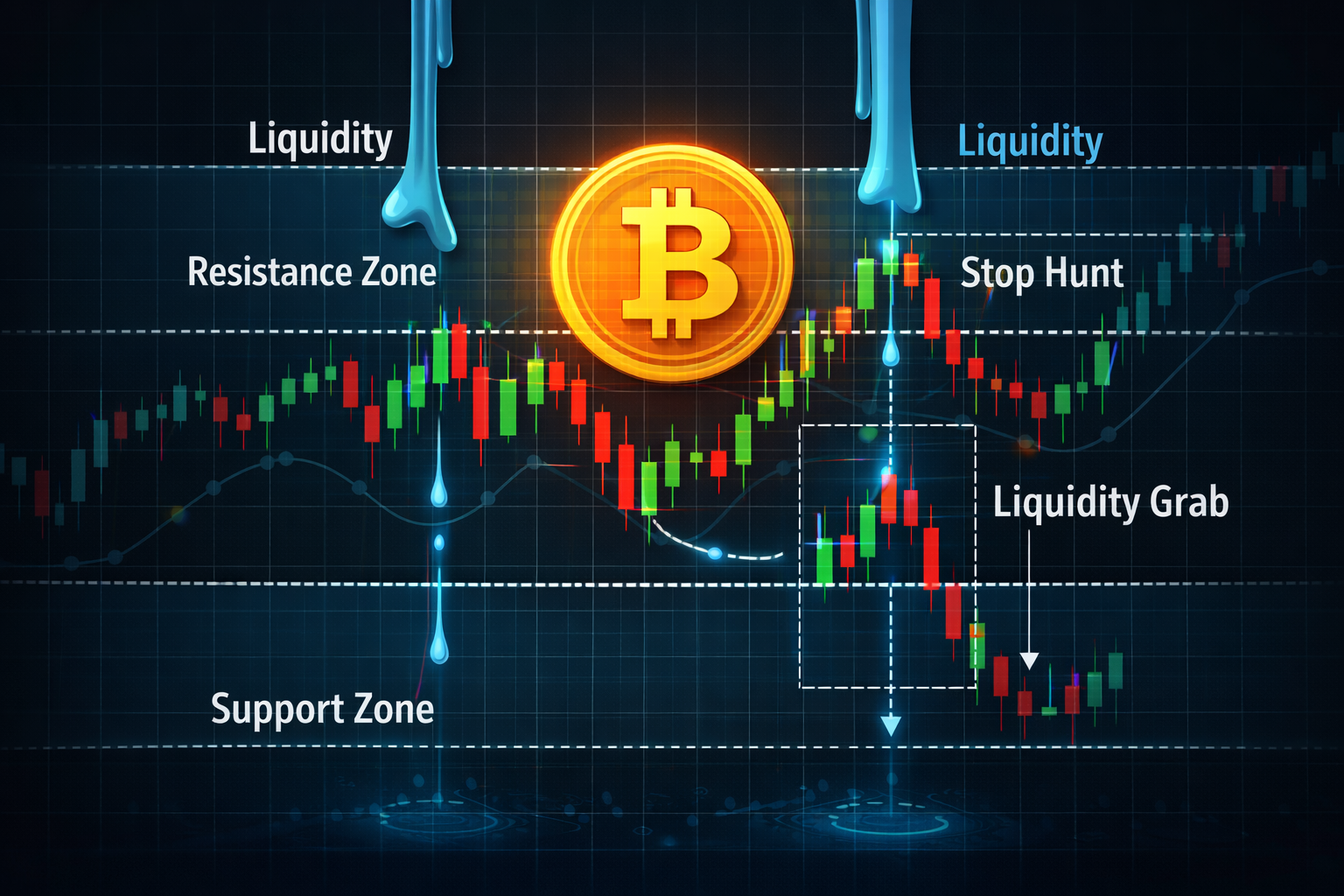
This is the most common trap. A retail trader sees the price hit a level twice and fail to break it. They think, "Aha! A Double Bottom! I should buy!" They place their stop loss right below those two equal lows. See the chart below.
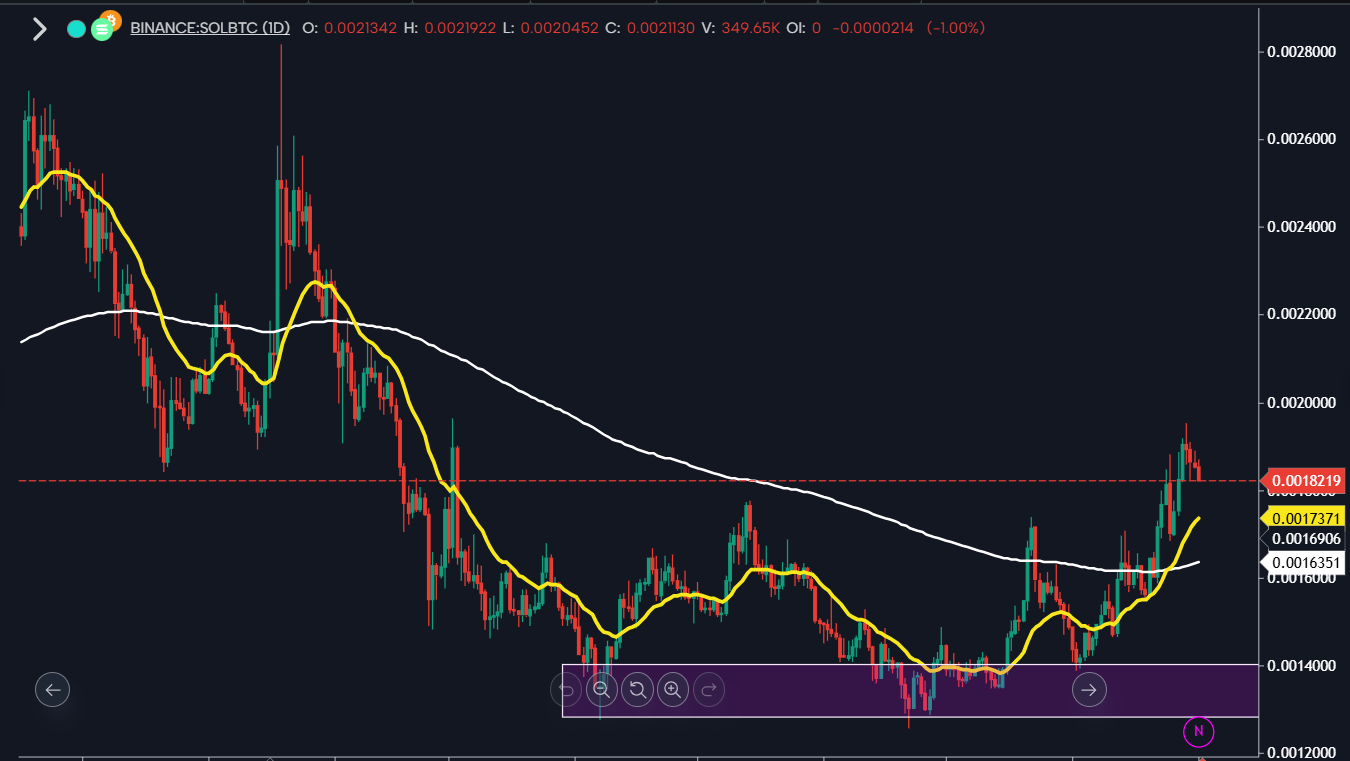
To Smart Money, those stop losses look like a big pile of cash. They will purposely push the price down just a little bit further to "sweep" those stops, grab the money, and then launch the price in the opposite direction.
2. Trendlines
We’ve all been told that "the trend is your friend." People draw diagonal lines connecting the lows of a price move. They believe that as long as the price stays above the line, the trend is safe.
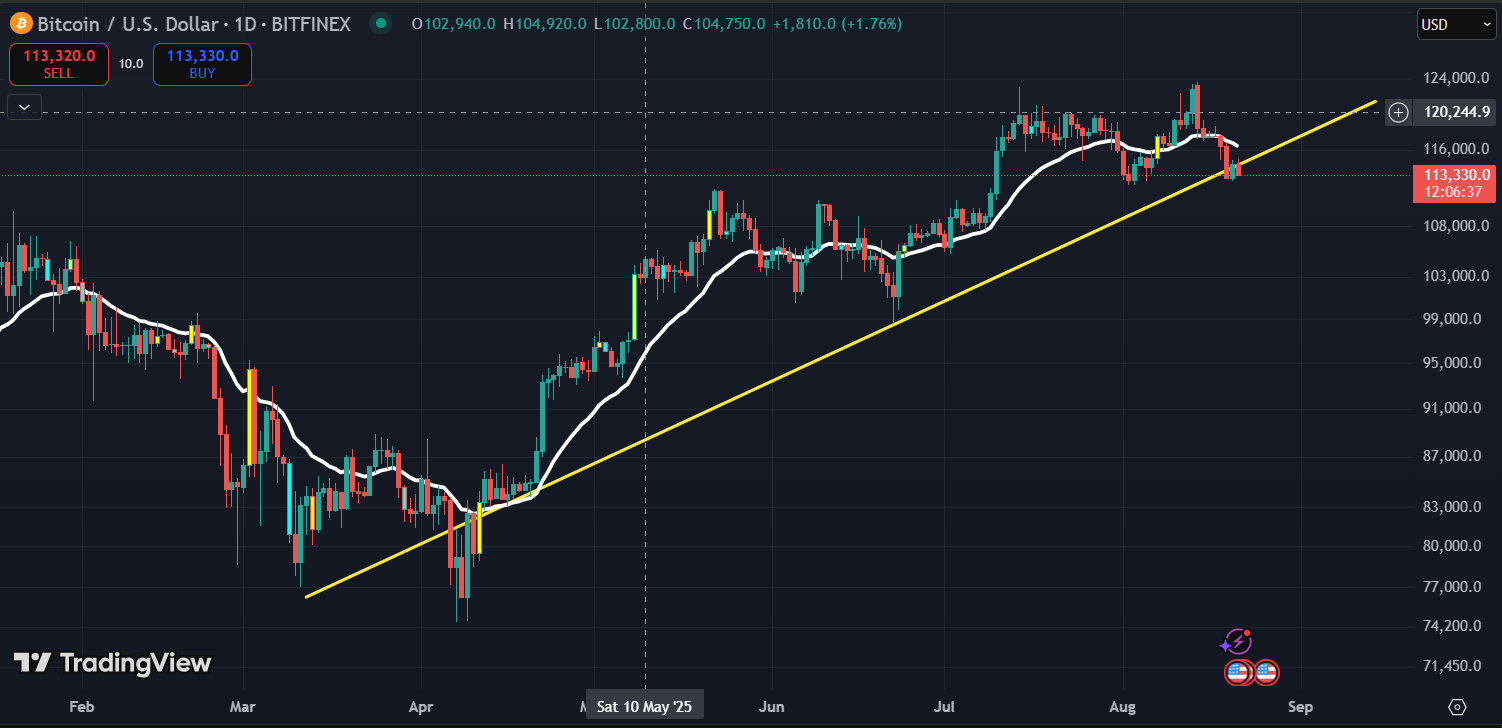
Retail traders place their stops just under the trendline.
Smart Money often breaks the trendline on purpose to make you think the trend is over.
Once you panic and sell, they buy your coins at a discount.
3. Support and Resistance
Support and resistance are the biggest traps in day trading. When the price hits a "ceiling" (resistance) multiple times, traders sell and put their stops just above the ceiling. Smart Money will "spike" the price above that ceiling to trigger those stops before crashing the price back down.
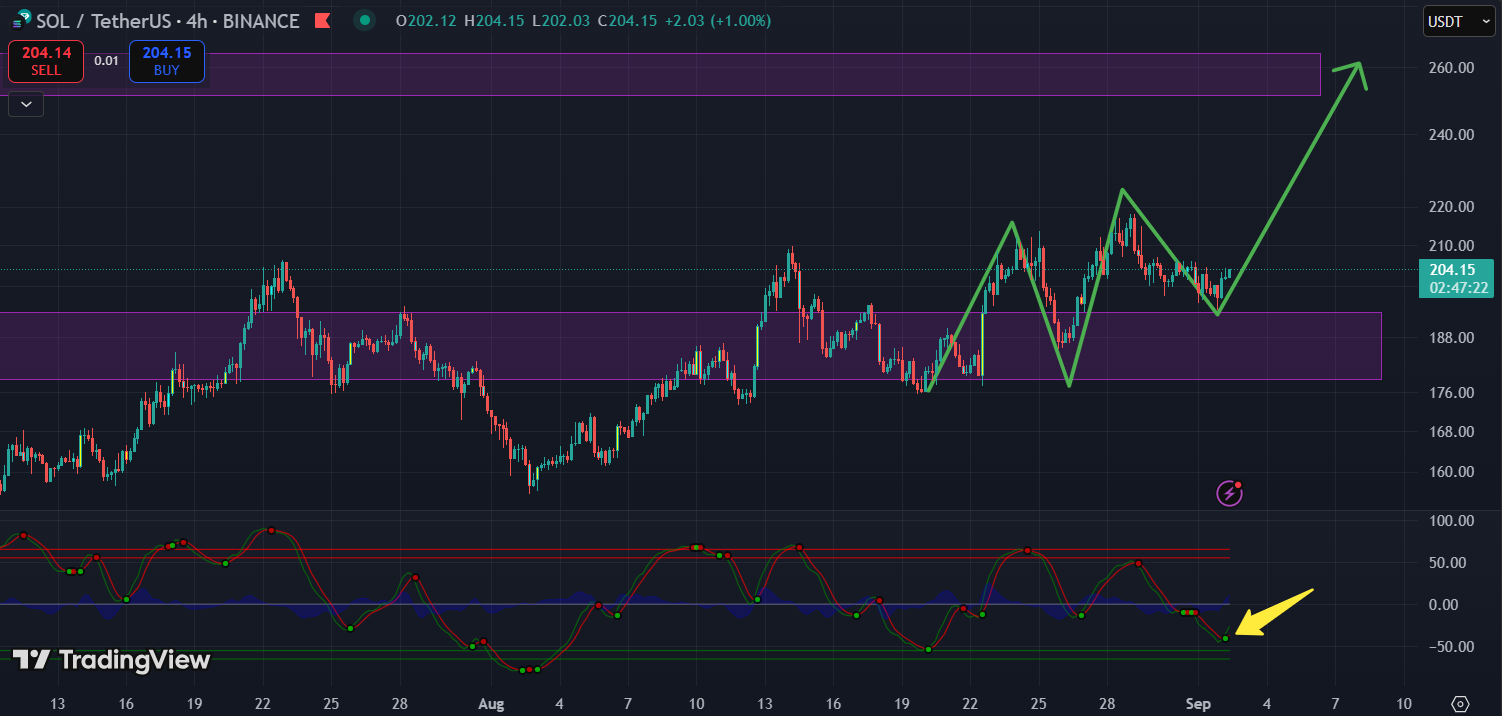
Learning to see these zones is the first step. But to make a profitable crypto trading strategy based on liquidity concepts, you need to know how to react when the "sweep" happens.
The Liquidity Sweep Strategy: A Step-by-Step Guide
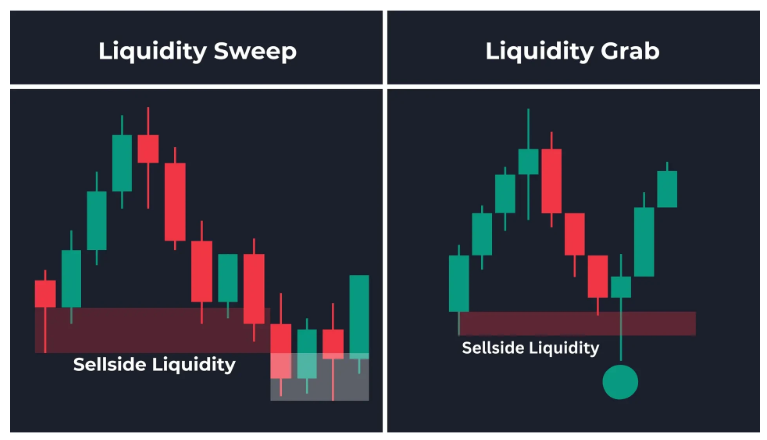
To be a successful BTC-USD day trader, you need a mechanical process. You don't want to guess; you want to follow the footprints left by the big banks. Here is the 3-step process to trading the liquidity sweep. See the example below from B2Broker.
Step 1: Identify Market Structure
Before you look for liquidity, you must know the trend. Is the market making Higher Highs and Higher Lows (Uptrend)? Or is it making Lower Highs and Lower Lows (Downtrend)?
In a downtrend, you want to look for "Equal Highs" to be swept before the price continues down.
In an uptrend, you want to look for "Equal Lows" to be swept before the price continues up.
Step 2: Wait for the "Sweep"
Once you find a liquidity zone (like a Double Bottom), do not enter yet. Be patient. Wait for a single candle to "stab" below that zone. This is the moment Smart Money is triggering all the stop losses.
Step 3: Look for the Shift in Momentum
After the price sweeps the liquidity, look at the candles. If the price immediately snaps back and starts moving with big, strong candles in the opposite direction, that is your signal.
Entry: Enter as soon as you see bullish momentum after a downward sweep.
Stop Loss: Place your stop below the new "spike" low.
Take Profit: Target the next area of liquidity (the opposite highs or lows).
Is Liquidity Enough to Win? (The Importance of Confluence)
While the liquidity concept for Bitcoin day traders is powerful, it shouldn't be your only tool. Think of liquidity as the "cherry on top" of your trading sundae.
To be truly successful, you need Confluence. This is a fancy word for "multiple reasons to take a trade." You should always look at these three things in order:
Market Structure: Which way is the overall tide moving?
Supply and Demand Zones: Where are the areas where price has moved fast in the past?
Liquidity: Where are the "traps" that need to be cleared out before the real move starts?
If you have a demand zone (a place where people want to buy) and there is a "Double Bottom" liquidity sweep right inside that zone, you have a high-probability trade!
Common Mistakes to Avoid:
Predicting the Sweep: Don't guess that a sweep will happen. Wait for it to actually occur.
Trading Against the Trend: Sweeps work best when they "clear the path" for the main trend to continue.
Ignoring News: Big news events can create "fake" liquidity moves. Always check the calendar before trading.
Trading is a journey, and mastering liquidity is like getting a pair of X-ray specs for the charts. You can see the "invisible" money that other traders are ignoring.
Becoming the "Smart Money"
The liquidity concept for Bitcoin day traders isn't about being faster than everyone else; it's about being more patient. Most crypto day traders lose because they rush into trades at obvious support and resistance levels. By waiting for the "Liquidity Sweep," you are essentially letting everyone else fail first so you can enter at the best possible price.
Remember: The market needs fuel. If you don't want to be the fuel, you have to be the one driving the car. So, master your market structure, identify those retail traps, and wait for the "Smart Money" to show their hand.
To master profitable trading strategies with technical analysis, click here to download the Crypto Traders' Handbook and begin your journey.