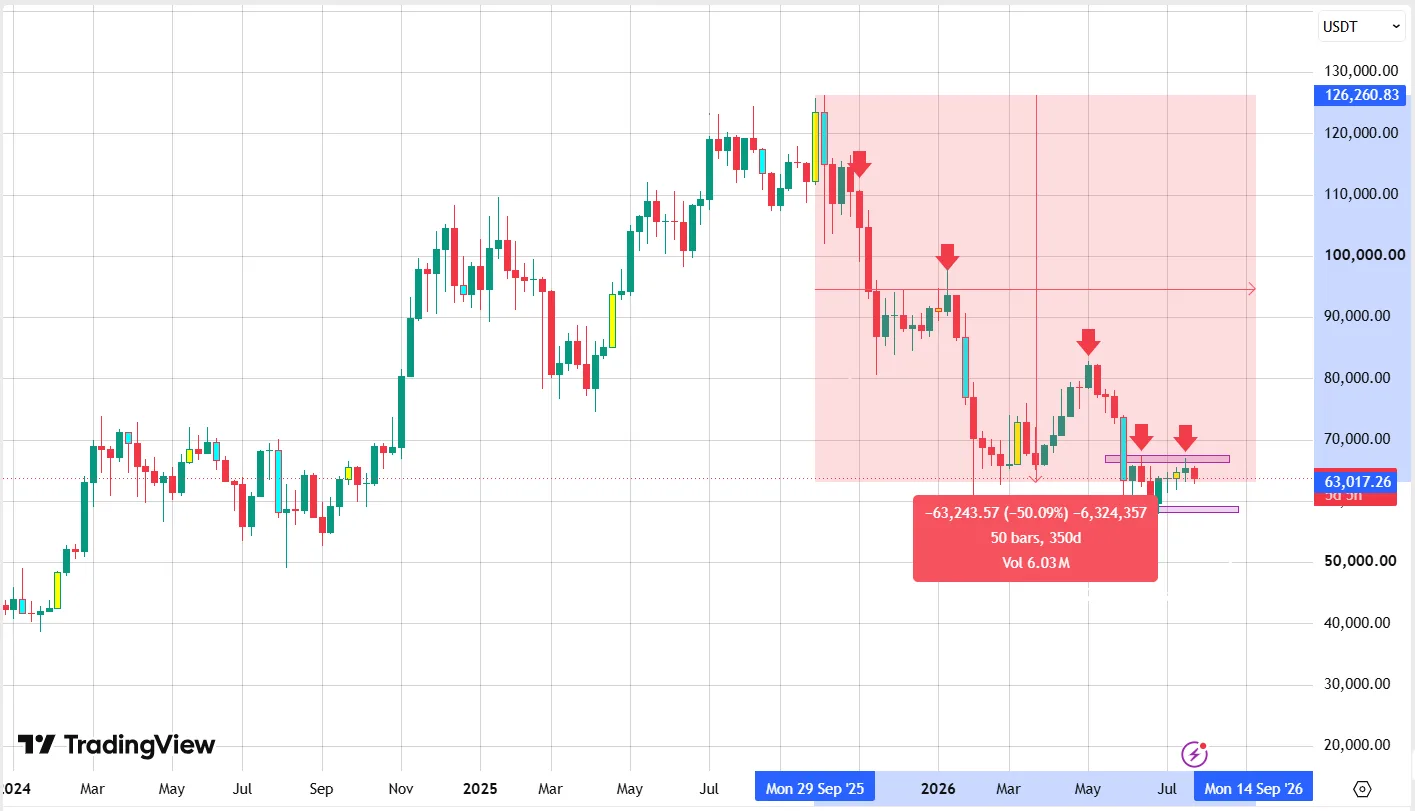
Bitcoin Below $83K as Treasury Yields Hit 2007 Highs: What It Means
Bitcoin held up after the SEC's rate hike announcement, but Wednesday's bond selloff sent the market lower. Now, the U.S. 10-year yield touched 5.13% intraday, its highest since 2007. And traders see a roughly 70–75% chance of a Fed hike on October 28, per CME FedWatch data. Finally, spot Bitcoin ETFs have taken in money for five straight sessions.
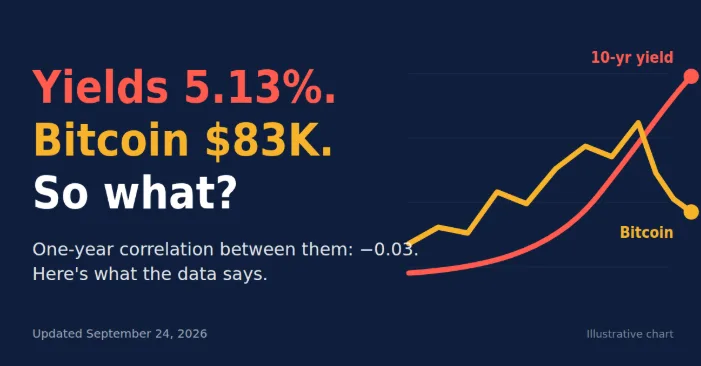
Bitcoin Slips Below $83K as Treasury Yields Hit 2007 Highs: Should You Worry?
Why are Treasury yields surging right now?
Strong data, sticky inflation risk, and heavy borrowing are all hitting at once.
September's flash U.S. composite PMI jumped to 58.4, the highest since July 2021, with business activity growing at its fastest pace in more than five years. That reinforced the view that the Fed isn't done. According to CoinDesk, Middle East tensions are clouding the inflation outlook, and heavy borrowing for AI infrastructure is adding to bond supply.
The pain isn't limited to the U.S. Yields are also under pressure in France, Germany, the U.K., and Japan. Robin Brooks of the Brookings Institution described the day this way: "Strong U.S. data hit, and "fiscally vulnerable places caught on fire." In other words, this was a global debt story that happened to be set off by a U.S. data point."
Are traders really pricing in four Fed rate hikes?
That's what the futures market implies. CME FedWatch indicates a 4.75–5% fed funds range by June 2027, four quarter-point hikes from today's 3.75–4%. The Fed has already raised rates by 25 basis points this month.
Closer in, FedWatch shows about a 75% probability of an October hike to 4.00–4.25%. One analyst quoted by Cointelegraph put the odds at roughly 70%, up from about 55% a day earlier.
Treat these as market pricing, not a forecast. Odds swing sharply with each data release, and softer numbers could quickly pull expectations back.
The pressure isn't limited to crypto:
- The dollar index is above 101, up 3% this year.
- Gold is just above $4,200, about 25% below its January high.
- The long-bond ETF (TLT) sits at all-time lows under $80.
Bitcoin is one of several assets feeling the squeeze.
Does Bitcoin actually care about bond yields?
Over the long run, the evidence says barely.
The textbook argument is that higher yields raise the opportunity cost of holding non-yielding assets, such as Bitcoin and gold. It sounds right. But CoinDesk's analysis found a 90-day correlation between Bitcoin's daily returns and the 10-year yield of just −0.18, with −0.06 over 180 days and −0.03 over a year. Those numbers indicate almost no relationship.
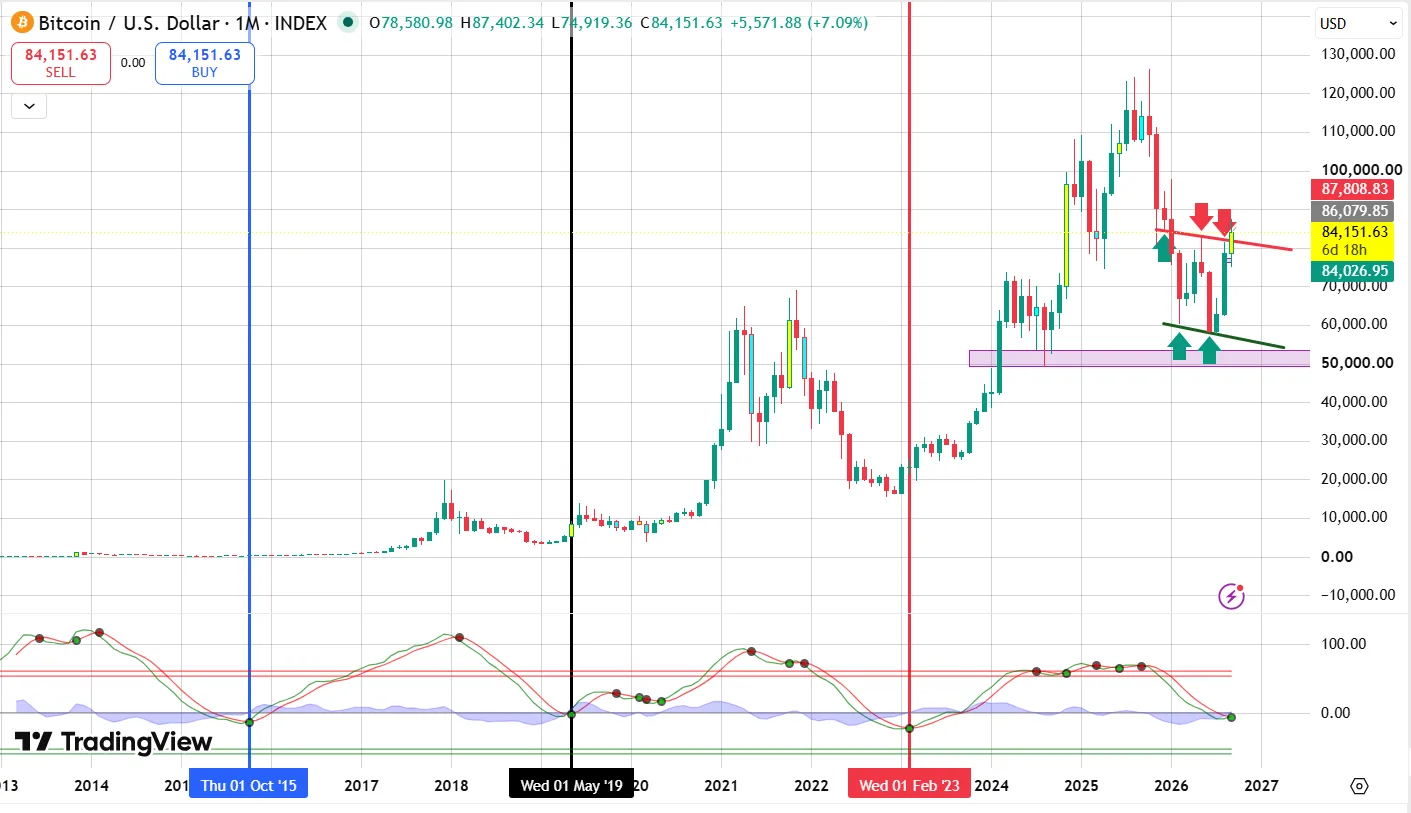
The bigger picture supports it. Bitcoin is up 191% since 2021 and reached a record near $126,200 last October, even as 10-year yields rose more than 400 basis points in the U.S. and over 500 in the U.K. and France. See the BTC/USD chart below.
Two caveats keep this honest:
- Low correlation doesn't mean immunity. It describes the past, not a guarantee.
- Correlations shift in stressed markets, which is exactly when investors need them to hold.
For portfolio builders, though, a near-zero link to rates is a feature. It means Bitcoin isn't simply trading like a rates-sensitive asset, which is the kind of diversification argument investment firms like Fidelity Digital Assets have made for years.
What is actually hurting Bitcoin: yields or volatility?
Volatility, most likely. The MOVE Index, which tracks expected Treasury volatility, surged 21% to 95 on Wednesday, its highest level since April 1. That timing aligns with Bitcoin's drop. When the global financial market turns jumpy, credit tightens and traders de-risk across the board.
It's also possible the market was simply looking for an excuse to pull back after a steep run higher. Bitcoin was up about 9.5% over seven days before the slide.
Leverage adds fuel. Higher borrowing costs can make dollar-funded leveraged strategies less attractive and amplify downside moves. Cointelegraph also flagged $280 million in long liquidations as Bitcoin dipped below $84K, signaling that overcrowded long positions were being unwound.
If Treasury volatility keeps climbing, more downside is plausible. If it cools, this appears to be a routine pullback.
Are ETF buyers running for the exits?
No, and that's one of the more useful signals here. U.S. spot Bitcoin ETFs took in about $347 million on Wednesday, marking their fifth straight day of inflows and bringing the streak to roughly $2.65 billion, according to Cointelegraph, citing SoSoValue data. The daily figure was down from Tuesday's $714.75 million and Monday's $998.95 million, a 2026 high. BlackRock's IBIT led with $166 million, followed by Fidelity's FBTC with $143 million, per Farside Investors.
The month-level numbers matter, too. September inflows totaled about $2.37 billion, offsetting earlier outflows and lifting year-to-date inflows to roughly $596 million. Year-to-date inflows are modest, so this is a recovery in progress, not a stampede.
Slowing inflows on a down day are normal. What would worry me is a flip to sustained outflows, and that hasn't happened yet.
Is "Uptober" still on the table?
Seasonality is a talking point, not a trading system. Still, the numbers are worth knowing.
According to CoinGlass data compiled by FXStreet, September has the weakest average return of any month at −2.34%. Yet Bitcoin hasn't closed a September in the red since 2022 and is up 7.35% so far this month. October has averaged a 19.92% gain, second only to November.
The catch is the calendar. Seasonal patterns can be swamped by macro shocks, and this October includes a possible Fed hike. History provides context, not a promise.
What should you watch next?
- Data releases: Resilient labor data or hawkish Fed signals could push yields and the dollar higher. Softer numbers could ease hike odds.
- The MOVE Index: A sustained climb above Wednesday's 95 would signal bond stress is spreading.
- ETF flows: Watch whether inflows hold or turn to outflows.
- The dollar and yen: The yen has weakened back to about 159 per dollar, which revives carry-trade worries.
- The October 28 Fed meeting: The next big event for rate expectations.
FAQ
Is rising Treasury yield bad for Bitcoin?
Not consistently. The 90-day correlation with the 10-year yield is about −0.18, so the relationship is weak. Sudden bond volatility can still hit crypto in the short term.
How high is the 10-year Treasury yield?
It closed Wednesday at 5.11% and touched 5.13% intraday, the highest since 2007.
Will the Fed raise rates in October?
Markets currently price roughly 70–75% odds, but that can change with every data release.
Are Bitcoin ETFs still seeing inflows?
Yes. Spot Bitcoin ETFs logged five straight days of inflows through Wednesday, totaling about $2.65 billion.
The bottom line
Bitcoin's dip below $83K is real, but the story isn't "yields kill crypto." Over the long run, Bitcoin has largely ignored the bond market. In the short run, it's sensitive to bond market volatility, leverage and shifting Fed expectations. ETF demand hasn't cracked. The next few data prints will show whether this is a shakeout or something bigger.
Sources
- CoinDesk, Traders price in 4 Fed rate hikes by June 2027 as bitcoin slides below $83,000 (James Van Straten)
- CoinDesk, The data proves it: Bitcoin doesn't care about rising bond yields over long-term (Omkar Godbole)
- Cointelegraph, Bitcoin falls below $84K as 10-year Treasury yield hits 19-year high
- Cointelegraph, Bitcoin ETFs add $347M as BTC falls below $84K after topping $87K (Helen Partz)
- Cointelegraph, Bitcoin long liquidations hit $280M as BTC price dips under $84K
- FXStreet, Bitcoin falls below $84K as 10-year Treasury yield hits 19-year high (CoinGlass seasonality data)
- CME FedWatch Tool
- Robin Brooks, The global bond market blows up (Substack)
This article is informational only. Do your own research before making financial decisions.
Want a complete guide to master crypto cycles for long-term investing? Download the Golden Buy Zone Blueprint to get started.