Cryptocurrency for Beginners 2026-2027: What Is It and How Does It Work?
Want to understand cryptocurrency in 2026-2027 without technical jargon? Learn what digital tokens are, how blockchain works, and why crypto has value.

Cryptocurrency for Beginners: What Is It and How Does It Work?
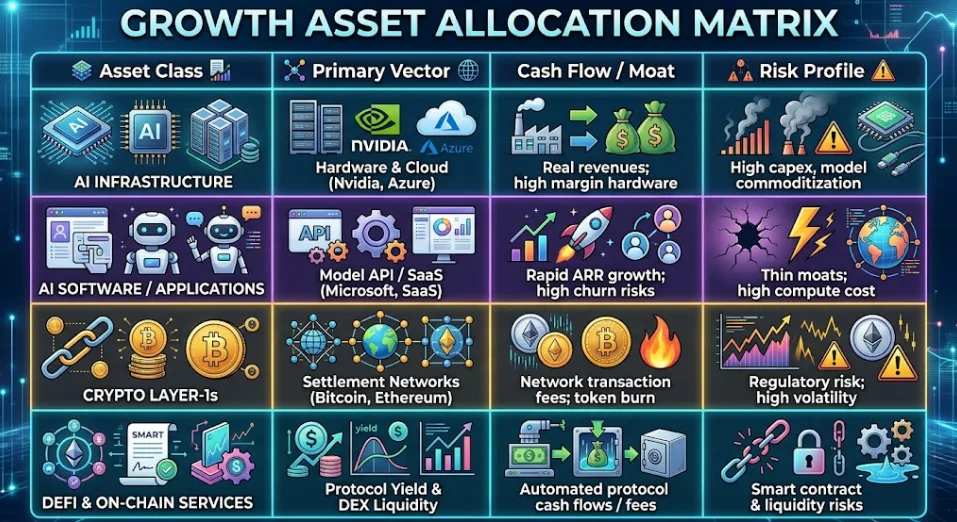
Cryptocurrency is a digital or virtual currency that runs on a decentralized computer network called a blockchain, enabling people to transfer value globally without relying on banks or governments. Instead of central authorities, it uses cryptography to secure transactions, verify ownership, and control the creation of new units. Users can send, receive, and store cryptocurrency in digital wallets using public and private cryptographic key pairs. See the diagrams below for illustrations.
Cryptocurrency Meaning: A Simple Definition
If you're a beginner trying to understand how cryptocurrency works, this is for you. Cryptocurrency is a decentralized digital asset that functions as a medium of exchange, a store of value, or a utility token on a distributed network. Unlike traditional cash issued by central banks, cryptocurrencies rely on mathematical algorithms and distributed ledger technology to enforce financial rules and prevent fraud.
To understand cryptocurrency without getting bogged down in computer science, imagine a shared digital ledger. If five friends track who owes what on a physical notepad, anyone could secretly erase a number or add fake transactions if left alone with it.
A cryptocurrency replaces that single notepad with thousands of identical copies stored on computers worldwide. Every time someone sends money, every computer updates its copy simultaneously. If someone tries to alter their local copy to add extra funds, the rest of the network detects the mismatch and automatically rejects the fake entry. Get started today using Bybit, my preferred Cryptocurrecy Exchange.
Cryptocurrency for Beginners: How Transactions Work Step-by-Step
Understanding cryptocurrency for beginners starts with looking at what happens during a standard transaction. When you send digital assets from one wallet to another, your transaction passes through four distinct phases before becoming permanent.
Initiation and Digital Signatures: You open your digital wallet app, enter the recipient's public wallet address, and specify the amount to send. Your wallet uses your private key (a secret cryptographic password) to sign the transaction, proving you own those funds without revealing your private key to the network.
Broadcasting to the Network: Your signed transaction enters a global pool of unconfirmed transactions, often called the memory pool or mempool. Computers operating on the network (known as nodes) check that your wallet actually contains the funds you want to send.
Block Inclusion and Consensus: Specialized nodes bundle your transaction with hundreds of others into a cryptographic batch called a block. The network agrees on the validity of this block through a consensus mechanism, such as Proof of Work (used by Bitcoin) or Proof of Stake (used by Ethereum).
Permanent Ledger Addition: Once verified, the new block is appended to the existing chain of blocks (the blockchain). The transaction is complete, irreversible, and visible on the public ledger to anyone.
Real-World Example: Bank Wire vs. Bitcoin Transaction
Consider the practical differences when transferring $1,000 internationally to a relative overseas:
Traditional International Bank Wire: You submit a request through your local bank. The payment passes through multiple correspondent banks, requires SWIFT processing, takes 2 to 5 business days to clear, and incurs foreign exchange markup fees and $30 to $50 in wire transfer charges.
Bitcoin Transaction: You send 0.015 BTC directly to their wallet address. The transaction is processed across the global network 24/7, settles in approximately 10 to 30 minutes regardless of international borders, and incurs a network fee determined by current blockchain traffic rather than the total transfer amount. Give it a try on Bybit, my favorite platform for buying and selling cryptocurrencies.
Why Cryptocurrency Has Value
To answer why cryptocurrency has value comes down to three fundamental drivers: programmatic scarcity, network utility, and consensus-based trust. Cryptocurrencies do not have value because a government decrees them legal tender; they have value because people agree to trade real goods, services, and fiat money for them based on their built-in properties.
1. Programmatic Scarcity
Traditional currencies suffer from inflation when central banks print more money, eroding purchasing power over time. Many major cryptocurrencies have strict economic rules hardcoded into their software. Bitcoin, for instance, has a fixed maximum supply of 21 million coins. This predictable, unalterable supply model prevents central authorities from inflating the currency.
2. Utility and Smart Contracts
Cryptocurrencies often represent more than simple digital cash. Networks like Ethereum allow developers to run automated programs called smart contracts. Holding and using these tokens provides access to decentralized lending platforms, global trade execution, digital identity verification, and supply chain tracking. The token's value rises as demand for the underlying platform's utility increases.
3. The Myth of Intrinsic Value
Critics often argue that cryptocurrency lacks intrinsic value because it isn't backed by gold or other physical commodities. Yet paper currencies such as the U.S. Dollar and the Euro have not been backed by gold since 1971. Modern fiat currency holds value because society trusts the economic system behind it. Cryptocurrency operates on the same principle of collective trust, replacing trust in central politicians with trust in open-source mathematics and code.
Cryptocurrency vs. Fiat Currency: Key Differences
To evaluate how digital tokens compare with traditional government money, let us examine their operational structures side by side.
3 Critical Beginner Mistakes to Avoid
Most ranking guides cover basic definitions, but non-technical users often fall into predictable financial traps because of simple misunderstandings of market structure.
Mistake 1: Confusing Unit Price with Market Capitalization
Beginners often assume that a cryptocurrency priced at $0.0001 per token is "cheaper" and has more room to grow than one priced at $50,000. This assumption is mathematically incorrect.
Always evaluate an asset by its Market Capitalization (Total Supply × Current Token Price). A coin priced at $0.0001 with 100 trillion tokens in circulation has a higher valuation than a coin priced at $100 with 100,000 tokens in circulation.
Mistake 2: Ignoring Gas and Network Fees
Every blockchain transaction requires processing power, paid for with network fees (often called "gas fees"). During periods of heavy network usage, sending $10 worth of a token on a layer-1 network like Ethereum might cost $15 in network fees. Always check current network congestion, or consider using Layer-2 scaling networks (like Arbitrum or Optimism) for lower-value transfers.
Mistake 3: Confusing Exchange Accounts with On-Chain Wallets
Leaving your assets on a central platform means the platform holds your cryptographic keys on your behalf. While centralized platforms offer convenience and recovery options, true ownership of cryptocurrency means holding your own private keys in a self-custody software or hardware wallet.
If you are looking to start buying, selling, or trading digital assets with institutional-grade security, consider creating an account on Bybit. New users can register today, claim a $20 sign-up bonus, and explore a user-friendly trading interface with deep liquidity across hundreds of spot and futures markets.
How to Safely Get Started with Crypto
If you want to acquire your first digital assets safely, follow this simple step-by-step process:
Choose a Secure Exchange Platform: Select a well-capitalized global exchange like Bybit that offers two-factor authentication (2FA), proof of reserves, and low spot trading fees.
Complete Identity Verification (KYC): Regulated exchanges require a quick identity check using a passport or national ID card to comply with global financial safety standards.
Fund Your Account: Transfer fiat currency (USD, EUR, GBP, or local currencies) using a bank transfer, credit card, or peer-to-peer (P2P) payment network.
Make Your First Purchase: Buy an established asset like Bitcoin (BTC) or Ethereum (ETH) using a simple market order. Bybit is my preferred crypto exchange.
Secure Your Account: Enable hardware-based or app-based two-factor authentication (such as Google Authenticator) immediately. Never use SMS authentication alone.
People Also Ask: Frequently Asked Questions
Is cryptocurrency legal to buy and use?
Cryptocurrency is legal to purchase, hold, and trade in the vast majority of developed nations, including the United States, European Union member states, the United Kingdom, and Australia. Regulators treat digital assets as taxable property or financial commodities. However, a few countries have restricted or banned domestic cryptocurrency banking access. Always check your local financial regulations.
How do you make money with cryptocurrency?
Investors generate returns through long-term capital appreciation (buying assets and holding them as their market value rises), spot trading on market fluctuations, yield farming, or staking assets to earn network validation rewards. Making money in crypto carries market risk, and capital can decrease in value just as easily as it grows.
What happens if you lose your crypto wallet password?
If you lose the seed phrase or private key for a non-custodial crypto wallet, no customer support team can reset it for you. You will permanently lose access to those funds. However, if you store your funds on a reputable centralized exchange, you can reset your password using standard email, phone, and identity verification protocols.
Is crypto safe from hacking?
Major public blockchains like Bitcoin and Ethereum have never been hacked at the core protocol level, thanks to their massive decentralized computing power. However, individual users can fall victim to phishing scams, compromised exchange passwords, or vulnerabilities in unverified smart contract applications. Security depends largely on user precautions.
Summary:
Cryptocurrency is digital money that exists entirely online and operates without banks or central control. It uses advanced mathematics and a shared digital record, called a blockchain, to ensure that transactions are secure, permanent, and cannot be double-spent or forged.
And when you send cryptocurrency, your digital wallet signs the payment with your private key. The request is sent to a global network of computers that verify you have sufficient funds. Once verified, nodes bundle the transaction into a digital block, lock it to the public blockchain, and transfer the funds.
Please note that cryptocurrency has value because people trust its underlying code, utility, and fixed-supply rules. Like physical gold or paper fiat money, digital assets hold value as long as a global market of buyers and sellers agrees they are useful for payments, contracts, or storing wealth.
Yes, you can easily convert cryptocurrency back into traditional fiat currency like USD or EUR using a centralized exchange like Bybit. You can sell your digital assets for fiat currency and withdraw the balance directly to your linked bank account or debit card.
Click here to join Bybit and claim your sign-up bonus!
Related Articles: