Why Investing Early Is Important: The Math of Compounding
Why is investing early important for young adults? Investing early is important for young adults because it gives capital more time to compound, allowing small monthly deposits to grow into meaningful long-term wealth. Starting early reduces reliance on high salaries later in life, uses time to absorb short-term market volatility, and builds strong financial discipline.
Why Investing Early Is Important: The Math of Compound Growth
When I first started managing my personal finances, I thought putting away $50 or $100 a month was an empty gesture that would barely move the needle. I spent years waiting for a "real" income before building a portfolio, believing that small contributions were not worth the effort. That delay was the single most expensive mistake of my financial life. But I am glad I started anyway.
My investment decisions came from understanding compounding interest. Once I ran the compounding math, I realized that lost time is the one investment factor you can never recover.
Look, understanding why investing early is important comes down to exponential math: compound growth returns yield on your original capital as well as on all accumulated earnings from previous years. Starting early allows small monthly contributions to far outpace much larger sums invested later in life because your growth curve has decades to turn upward.
The 30-Year Mathematical Reality: Age 20 vs. Age 35
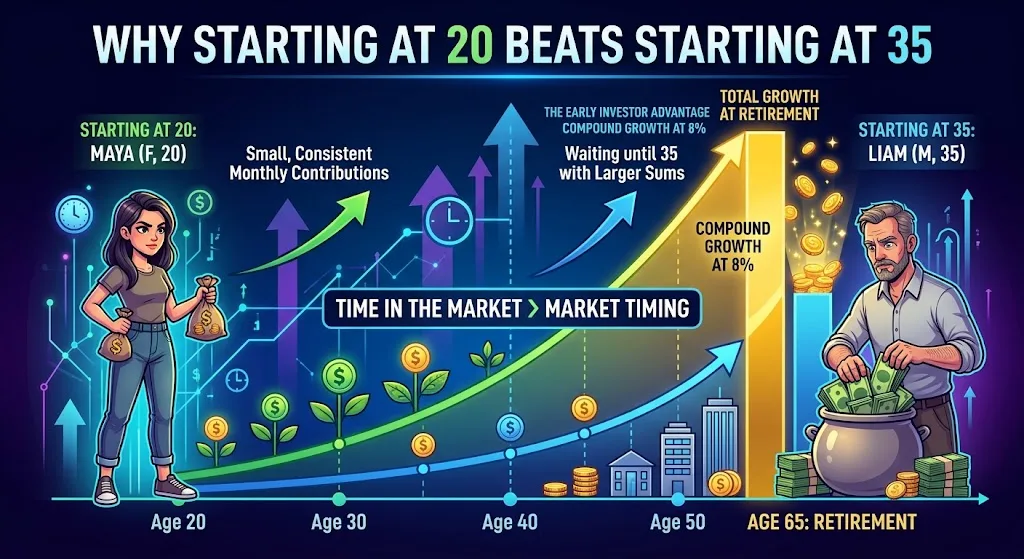
Delaying your investment journey by 15 years dramatically increases the out-of-pocket capital required to reach financial independence. To see how geometric growth punishes hesitation, consider two distinct investors, Maya and Liam, operating under an average annualized return of 8% (the historical average for broad market indices like the S&P 500, adjusted for long-term trends as of 2026).
Maya (The Early Starter): Begins investing at age 20. She contributes $100 per month ($1,200 per year) for 30 years until age 50, putting in a total principal of $36,000. At age 50, she stops contributing entirely and lets her balance grow untouched for another 15 years until she reaches age 65.
Liam (The Late Starter): Waits until age 35 to begin. Realizing he needs to catch up, he contributes $300 per month ($3,600 per year)—three times Maya's monthly rate—for 30 continuous years straight through to age 65. His total out-of-pocket principal invested is $108,000.
Despite investing $72,000 less of her earned cash, Maya finishes with a larger nest egg at age 65 than Liam.
Maya's money spent its first 30 years accumulating critical mass ($149,036). During the final 15 years (ages 50 to 65), when she did not add a single dollar of fresh income, her portfolio generated $323,664 in compound returns alone.
Liam spent triple the monthly cash over his entire working adult life, yet could not offset the 15 missed compounding years.
Why Investing Early Is Important for Long-Term Wealth
Knowing why investing early is important gives you a permanent structural advantage: early contributions shift the burden of wealth generation from your manual labor to capital compounding.
EARLY START (Age 20): [ Your Cash: 8% ] + [ Compound Returns: 92% ] = Final Wealth
LATE START (Age 35): [ Your Cash: 24% ] + [ Compound Returns: 76% ] = Final Wealth
When you begin investing in your twenties, your primary engine of wealth building is time rather than income volume. Compound growth operates on a parabolic scale where returns build on top of previous returns.
In the first decade of a portfolio, growth appears linear and relatively slow because the asset base is modest. By decades three and four, the interest generated annually exceeds your total accumulated cash deposits.
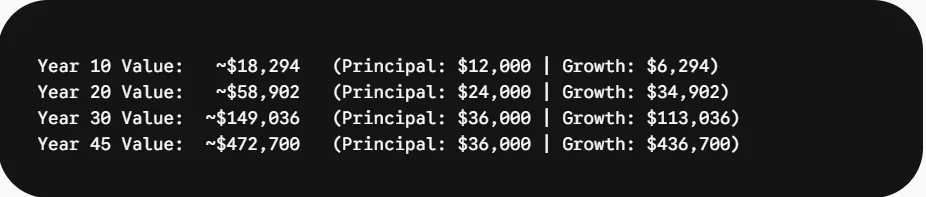
By age 65, 92% of Maya's total wealth consists of interest earned on the market, while only 8% came from her paycheck. Delaying your start forces you to save a significantly higher percentage of your active labor earnings to reach the same retirement numbers.
Why Investing Early Matters More Than Market Timing
Understanding why investing early matters helps clear up a common beginner misconception: waiting for the "perfect" market drop before buying in. Trying to time tops and bottoms consistently fails because missing a handful of the market's best recovery days severely hurts long-term performance.
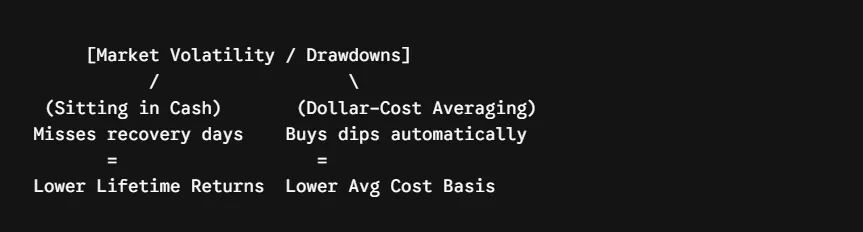
Historically, broad financial indices experience their highest single-day gains within two weeks of severe pullbacks. Investors sitting on cash waiting for lower entry points frequently miss these sudden turnarounds, locking in lower total lifetime returns than those who purchase assets consistently.
The Dollar-Cost Averaging (DCA) Advantage
Dollar-cost averaging (DCA) means deploying a fixed amount of cash into targeted assets on a fixed schedule, regardless of market sentiment. DCA removes emotional decision-making from your strategy and takes advantage of market volatility.
Automatic Accumulation: When market prices dip, your fixed monthly deposit purchases more total units or token fractions.
Lower Average Basis: When asset values recover, your average cost per unit remains below the peak price, expanding profit margins.
Behavioral Discipline: Automating allocations prevents panic selling during market downturns and prevents chasing rallies during high-volume rallies.
Whether allocating toward broad stock market index funds or established digital assets like Bitcoin and Ethereum, time spent in the market consistently outperforms trying to time short-term price movements.
Why Investing Matters in an Inflationary Economy
Examining why investing matters requires looking closely at cash depreciation. Holding uninvested cash in standard bank accounts causes a steady, guaranteed loss of purchasing power over time.
Central banks maintain target inflation rates between 2% and 3% annually, while systemic economic shifts can drive real-world consumer price inflation even higher. At a baseline 3% inflation rate, cash loses roughly 25% of its purchasing power every 10 years.
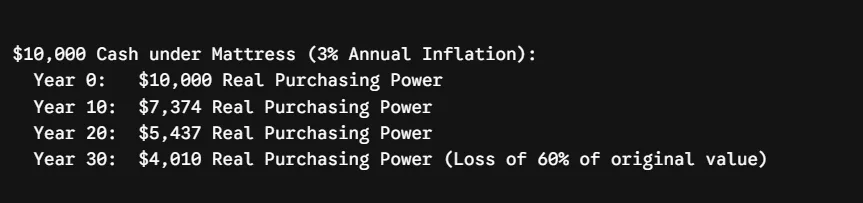
To preserve capital across multiple decades, your funds must yield a return higher than systemic inflation plus taxes. Investing in productive, non-dilutive assets—such as global equities, real estate investment trusts (REITs), or mathematically scarce digital networks—provides a structural hedge that protects your long-term purchasing power.
Why Investing Is Important Even with Small Sums
Understanding why investing is important dispels the belief that you need thousands of dollars in excess capital to get started. The modern financial infrastructure has eliminated minimum balance requirements, enabling micro-contributions to grow efficiently.
Fractional share trading and micro-crypto purchases mean that a $25 or $50 monthly deposit can instantly buy institutional-grade assets. Starting with small amounts builds crucial financial habits and establishes capital management discipline well before your earnings scale up.
Traditional Barrier: High Account Minimums ($1,000+) + Full Share Purchasing
Modern Infrastructure: Zero Minimums + Fractional Units + Automated $25 Purchases
Waiting until you earn a higher income before building an investment habit often backfires. Lifestyle inflation frequently expands personal spending alongside income growth, making it just as difficult to save at age 35 as it was at age 20 unless the investment habit is already established.
Step-by-Step Execution Plan for Beginners
Beginning an investment strategy requires an organized, low-friction framework that protects capital while maintaining consistency. See the screenshot below for details.
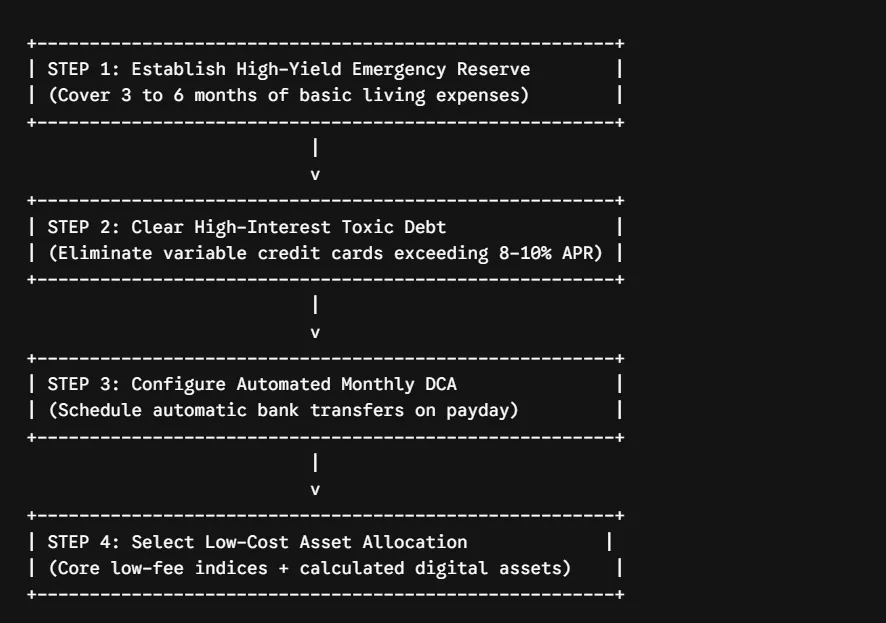
Establish a High-Yield Emergency Reserve: Keep three to six months of core living expenses in a liquid high-yield savings account (HYSA). This cash buffer prevents you from being forced to sell long-term assets at a loss during sudden market pullbacks.
Clear High-Interest Debt: Pay off high-interest balances like consumer credit cards that charge interest rates above 8-10%. Eliminating high-interest consumer debt provides a guaranteed return equal to the interest rate avoided.
Configure Automated Monthly DCA Accounts: Set up automated recurring transfers from your checking account to your brokerage or custodial trading platform on the day you receive your paycheck. Automating transfers ensures you pay your investment account first before discretionary spending occurs.
Select Low-Cost Asset Allocations: Direct early capital into broad, diversified index funds (such as total stock market or S&P 500 ETFs with expense ratios below 0.05%) alongside a balanced allocation to digital store-of-value assets based on your personal risk tolerance.
Common Failure Modes and Trade-offs
Building long-term wealth comes with real-world trade-offs and structural risks that simplified financial guides often overlook. Avoiding common beginner pitfalls helps protect your portfolio from unneeded drawdowns.
Ignoring Account Fees: High fund expense ratios and platform transaction fees actively erode compounding returns. A 1% annual management fee sounds small, but over a 30-year period, it can consume up to 20% or more of your portfolio's total final value. Always prioritize low-cost, unmanaged index structures and low-fee exchanges.
Over-Leveraging Asset Positions: Using margin or borrowed capital to boost returns introduces liquidation risk. Volatile broad markets and digital asset cycles regularly experience steep temporary pullbacks. Over-leveraged positions can be liquidated during dips, wiping out long-term compounding progress overnight.
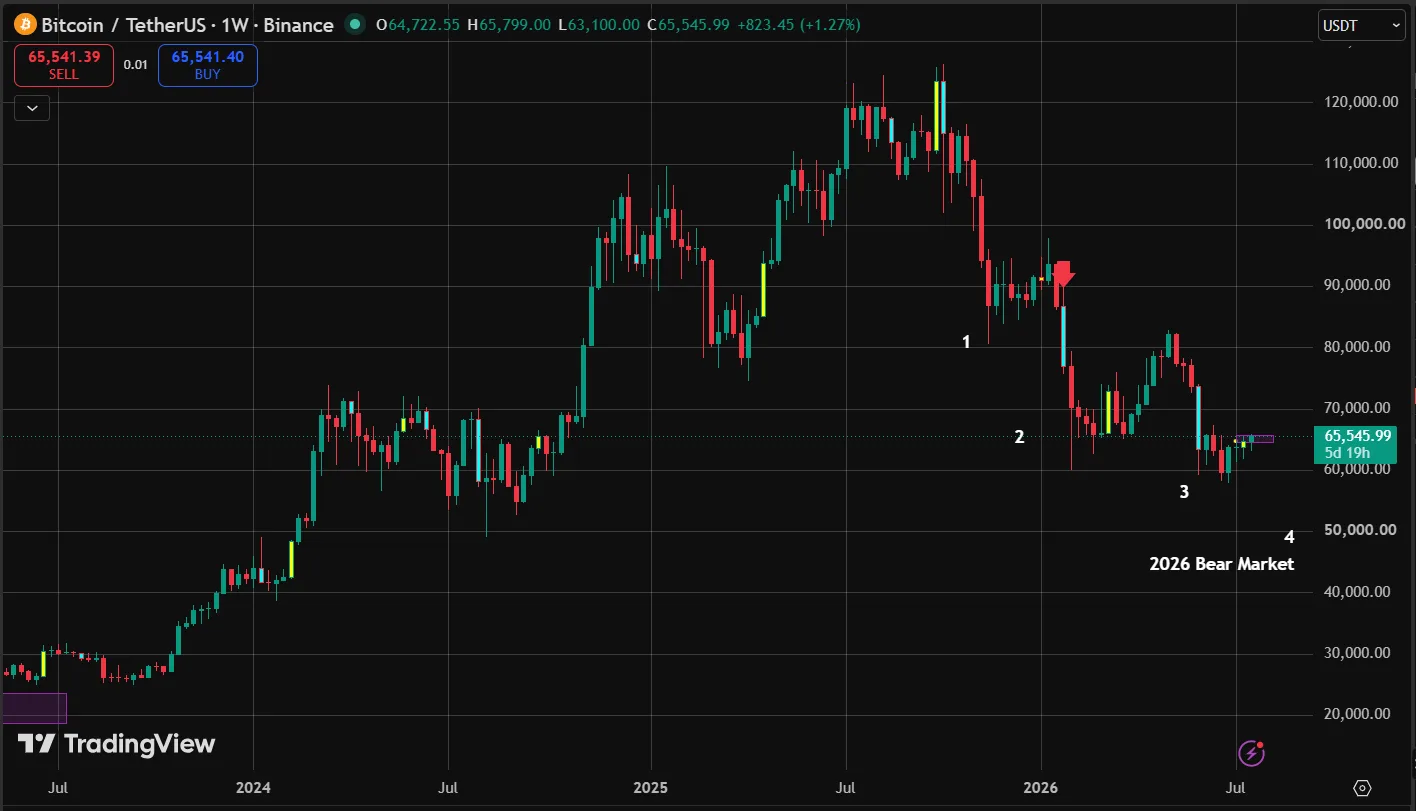
Panic Selling During Market Corrections: Markets do not move up in a straight line. Experiencing 20% to 50% drawdowns is a normal feature of broad equity and crypto market cycles. Converting paper unrealized losses into realized cash losses during market panics permanently damages your portfolio's growth curve.
Key Takeaway & Call to Action
The mathematical advantage of early investing comes down to time, not market timing or massive starting capital. A modest $100 monthly contribution started at age 20 can comfortably beat triple the monthly effort started 15 years later.
Stop waiting for the "perfect" market entry point or a higher salary. Set up an automated monthly investment transfer of $25, $50, or $100 today, lock in your compounding timeline, and let time build your wealth.
Frequently Asked Questions (FAQ)
Investing early is important for young adults because it gives capital more time to compound, allowing small monthly deposits to turn into meaningful long-term wealth. Starting early reduces reliance on high salaries later in life, uses time to absorb short-term market volatility, and establishes strong financial discipline.
Market timing fails because predicting short-term price movements requires consistently guessing both the exact top to sell and the absolute bottom to buy back in. Missing just a few of the market's strongest recovery days drastically reduces long-term returns compared to simply buying consistently over time.
You can start investing effectively with as little as $10 to $50 per month. Modern brokerages and digital asset exchanges offer fractional shares, low trading fees, and zero account minimums, allowing small recurring deposits to earn compound growth right away.
Yes, investing early is essential during periods of high inflation because holding uninvested cash guarantees a loss of purchasing power over time. Directing capital into growth assets like equities, real estate, and fixed-supply digital assets helps preserve purchasing power better than standard bank savings accounts.
The safest approach for a beginner is to build a liquid emergency fund first, pay off any high-interest debt, and set up automated dollar-cost averaging into low-cost, broad market index funds alongside a balanced, risk-managed allocation to established digital assets.
Click here to download the Golden Buy Zone Blueprint for Crypto Investors.
Click here to read a related article: Crypto vs. AI Investing