How to Investing in ETF: A Beginner's Guide to Index and Crypto Funds
ETF Investing, Index Funds, Crypto ETFs, Personal Finance, Beginner Investing, Stock Market, Exchange-Traded Funds, Wealth Building, Brokerage Accounts, Portfolio Diversification
How to Invest in ETFs: A Beginner's Guide to Index and Crypto Funds
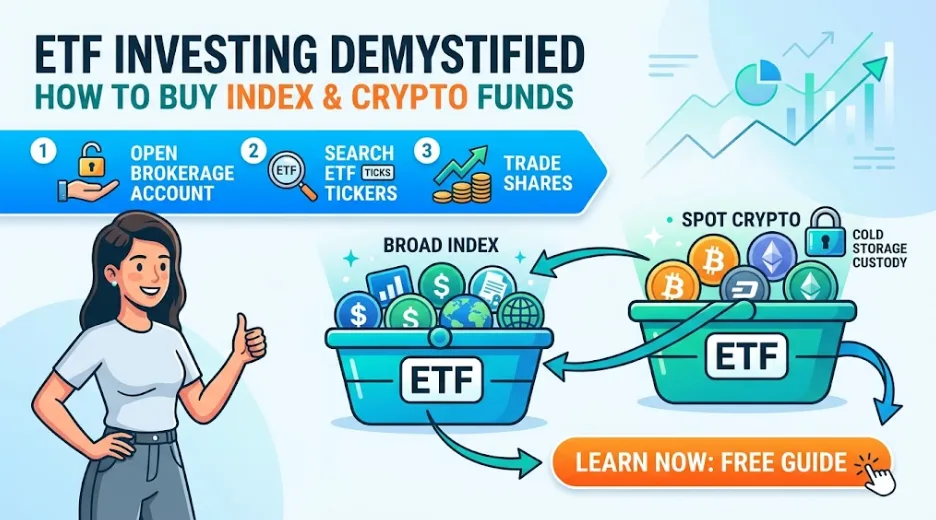
To start investing in an ETF, open a brokerage account, deposit funds, search for the fund's ticker symbol during market hours, and place a trade order. An exchange-traded fund (ETF) is a pooled investment security that bundles a basket of assets—such as stocks, bonds, or spot cryptocurrencies—so you can buy fractional or whole shares in a single transaction.
Key Takeaways
An exchange-traded fund (ETF) bundles hundreds of stocks, bonds, or commodities like crypto into a single security traded on stock exchanges like regular shares.
Unlike mutual funds, ETFs trade in real-time throughout market hours, allowing you to buy or sell at fluctuating live prices.
Spot cryptocurrency ETFs allow investors to gain direct exposure to digital assets through traditional brokerage accounts without managing private cryptographic keys.
Investing in broad market index ETFs provides instant diversification across multiple sectors and companies with a single trade.
What Is an Exchange-Traded Fund?
An exchange-traded fund is a single basket that holds multiple underlying assets. When you purchase a share of an ETF, you acquire a proportional slice of every asset in that basket.
Instead of researching and buying fifty individual stocks to build a diversified portfolio, an investor buys one ticker symbol. This packaging drastically reduces transaction fees and simplifies portfolio management. ETFs are designed to track specific benchmarks, sectors, commodities, or digital assets, giving everyday investors institutional-grade diversification.
Index ETFs vs. Mutual Funds: Key Mechanical Differences
Understanding how ETFs compare to traditional mutual funds helps clarify why many retail investors prefer exchange-traded products for flexible trading.
How Crypto ETFs Bring Digital Assets to Brokerages
For individuals exploring how to invest in cryptocurrency without setting up dedicated digital wallets or managing private keys, spot crypto ETFs offer a regulated alternative.
A spot cryptocurrency ETF holds the actual digital asset (such as Bitcoin or Ether) in secure cold storage managed by institutional custodians. When you buy shares of a spot crypto ETF in your brokerage account, the fund manager tracks the underlying asset's market price. This approach removes the technical hurdles of blockchain transactions, exchange security risks, and hardware wallet management, while integrating digital assets seamlessly into standard tax-advantaged or taxable brokerage portfolios.
How to Trade ETFs on the Stock Exchange
Executing your first ETF trade requires a structured approach through a licensed brokerage platform. Follow these practical steps:
Open a Brokerage Account: Choose a reputable online brokerage that offers commission-free stock and ETF trading, and fund your account via bank transfer.
Research the Ticker: Identify an ETF that matches your financial goals, examining its expense ratio, underlying holdings, and historical performance.
Select Order Type: Decide between a market order (executes immediately at the current market price) or a limit order (specifies the maximum price you are willing to pay).
Place the Trade: Enter the ETF ticker symbol, specify the number of shares or dollar amount you wish to buy, and submit the order during regular market hours.
Monitor Your Investment: Track your holdings as part of your broader portfolio strategy, reviewing performance and rebalancing periodically.
9. Frequently Asked Questions
What is the difference between an index ETF and a mutual fund?
An index ETF trades continuously on stock exchanges throughout the day, like an individual stock, whereas traditional mutual funds are priced only once at the end of the trading day. ETFs also tend to offer lower expense ratios and better tax efficiency than actively managed mutual funds.
Do I need a crypto wallet to buy a crypto ETF?
No, you do not need a crypto wallet or a cryptocurrency exchange account. Spot crypto ETFs trade directly within traditional brokerage accounts, allowing you to gain exposure to digital currencies using standard fiat currency without managing private keys.
What fees should I expect when trading ETFs?
Most online brokerages offer commission-free trading for standard ETF purchases. However, the fund issuer charges an ongoing annual fee, known as the expense ratio, which is automatically deducted from the fund's assets and reflects the cost of managing the fund.
Can I buy fractional shares of an ETF?
Yes, many modern brokerage platforms support fractional share trading. This allows you to invest a specific dollar amount rather than purchasing a whole share, making high-priced ETFs accessible even with modest capital.
Thanks for reading.
P.S. Need More Help and Resources?
Buy and sell crypto on Bybit, my preferred crypto exchange.
Download the Crypto Traders’ Handbook
Download Your AltSeason Blueprint
Upgrade Your Subscription to receive a copy of the BTM user’s guide.
Related Articles:
How to start cryptocurrency trading and investing for beginners