Why Cryptocurrency Needs to Be Regulated: Top Red Flags and Insider Scams to Watch
Cryptocurrency needs to be regulated to protect retail investors from insider trading, market manipulation, and predatory offshore exchanges. Here is what to watch for.
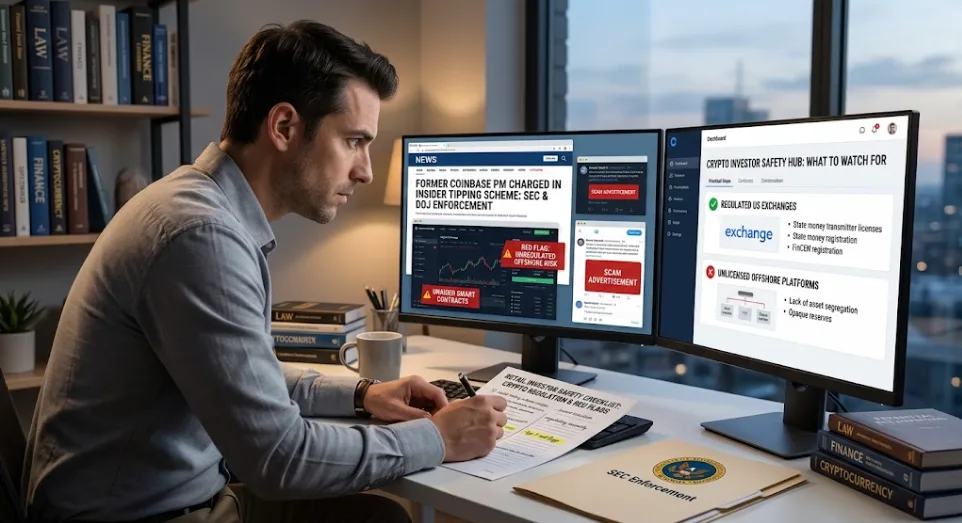
Why Cryptocurrency Needs to Be Regulated: Top Red Flags and Insider Scams to Watch
Cryptocurrency needs to be regulated to prevent market manipulation, protect retail investors from insider trading, and ensure that platforms maintain verifiable customer reserves. Without federal oversight, bad actors can exploit information asymmetries, run fraudulent promotional campaigns, and operate offshore without legal accountability. Establishing clear regulatory boundaries safeguards consumer funds and provides legal recourse when platforms default. We've had terrible experiences in this space, including the FTX collapse, Mt. Gox, Celsius Network, BlockFi, and many others.
Key Takeaways
Market oversight protects retail participants by enforcing mandatory financial disclosures and prohibiting unfair trading practices like front-running.
Real enforcement actions demonstrate that executive tipping schemes and insider trading are active risks on centralized crypto platforms.
Major search platforms restrict cryptocurrency advertising to prevent bad actors from promoting unregistered tokens and deceptive yield products.
Unregulated offshore exchanges lack customer asset segregation, leaving user balances exposed in the event of insolvency or fraud.
The Core Risks of Unregulated Crypto Markets
When critics argue that cryptocurrency is bad for beginners, they usually point to systemic market vulnerabilities rather than the underlying blockchain technology. Unregulated digital asset markets operate without the standard consumer safeguards mandated in traditional finance, such as FDIC insurance, mandatory audits, and strict conflict-of-interest disclosures.
Without clear market oversight, retail participants face unique structural risks:
Lack of Asset Segregation: Unregulated platforms frequently mix operational funds with customer deposits, creating severe solvency risks during market downturns.
Unrestricted Wash Trading: Fraudulent operators can use automated bots to buy and sell their own tokens, creating artificial trading volume and inflated price charts.
Absence of Bankruptcy Protections: If an offshore exchange collapses, retail users are treated as unsecured creditors, often losing their full balance.
Real Regulatory Cases: How Insider Schemes and Bad Ads Exploit Retail Users
Examining real legal enforcement actions reveals how bad actors exploit market gaps when regulations are absent or circumvented.
Case Study 1: Insider Trading and Asymmetric Information
In July 2022, federal prosecutors and the SEC charged Ishan Wahi, a former Coinbase product manager, along with his brother and an associate, in the first major cryptocurrency insider-trading tipping scheme. Wahi used confidential internal knowledge of upcoming token listings to buy assets before public announcements, generating substantial illicit profits before settling charges in 2023.
This case highlights why market oversight is essential: without strict internal controls, compliance monitoring, and enforcement, insiders can systematically extract value from retail buyers who enter the market only after public listing announcements inflate asset prices.
Case Study 2: Fraudulent Marketing and Ad Platform Crackdowns
In 2018, tech platforms, including Google, implemented blanket bans on cryptocurrency advertising after fraudulent Initial Coin Offerings (ICOs) drained millions from retail users. Although major search engines later introduced strict certification processes requiring financial registration, unregulated promotional campaigns continue to thrive on unmoderated social channels.
The Unregulated Ad Promotion Cycle:
Unregistered Project / Offshore Exchange: Bad actors launch platforms or tokens without legal registration or financial disclosures.
Paid Social Hype / Influencer Ads: High-yield promises and promotional campaigns flood social media.
Retail Buying at Inflated Valuations: Unwary investors buy into the hype, artificially driving up prices.
Insider Exit / Abrupt Liquidation Event: Insiders sell their holdings at peak prices, crashing the market and leaving retail investors with major losses.
These marketing restrictions were established because unregulated ad markets allow bad actors to present high-risk, speculative tokens as safe financial investments.
Top 3 Red Flags of Bad-Actor Projects and Offshore Platforms
Before connecting a wallet or depositing funds, watch for these three primary warning signs:
Anonymous Teams and Unaudited Smart Contracts: Projects that hide founder identities and decline independent security audits pose extreme exit-scam and code-exploit risks.
Guaranteed Yields or High "Risk-Free" Returns: Any platform promising fixed daily or monthly percentage returns typically uses uncollateralized lending or an unsustainable structure.
Lack of US Licensing or Proof-of-Reserves Disclosures: Platforms operating outside FinCEN money-services business (MSB) registration or state licensing often lack segregated customer accounts and independent reserve verification.
Regulated US Platforms vs. Unregulated Offshore Exchanges
Understanding where your funds are held is critical to asset safety.
Practical Checklist: How US Retail Investors Can Stay Safe
Follow these steps to minimize exposure to bad-actor crypto projects:
Verify State and Federal Registrations: Confirm that the platform is registered with FinCEN as a Money Services Business (MSB) and holds the required state-level licenses.
Demand Independent Security Audits: Ensure that project smart contracts have been reviewed by reputable third-party security firms.
Use Self-Custody for Long-Term Holdings: Move long-term digital assets to cold storage or hardware wallets to eliminate third-party exchange solvency risk.
Avoid Unregistered Investment Advice: Ignore trading signals, guaranteed-yield schemes, and sponsored social media pitches that promise outsized returns.
FAQ
Why do some people argue that cryptocurrency is bad for retail investors?
Critics argue that unregulated crypto markets expose retail investors to extreme volatility, predatory insider schemes, and total losses from platform insolvencies. Without mandatory disclosures or asset protection guarantees, unsophisticated participants frequently trade with asymmetric information and artificial market manipulation.
How does the SEC catch insider trading in crypto markets?
The SEC monitors suspicious trading volume around token listing announcements and analyzes public blockchain ledgers. By linking wallet activity to account verification records on centralized exchanges, investigators trace pre-announcement purchases to corporate insiders and tipped associates.
Why did major tech platforms ban crypto advertising?
Tech platforms have implemented advertising bans to protect users from widespread initial coin offering (ICO) fraud, phishing schemes, and unregistered investment scams. Modern ad policies require crypto businesses to demonstrate regulatory licensing before running promotional campaigns.
How can US retail investors check if a crypto exchange is licensed?
Investors can verify an exchange's legal status using the FinCEN MSB Registrant Search tool and by checking state financial regulatory databases. Legitimate exchanges publish license numbers and bank partnership details directly on their official compliance pages.
What happens to your funds if an unregulated crypto exchange fails?
If an unregulated offshore exchange fails, customer deposits are typically commingled with corporate liabilities. Users are treated as general unsecured creditors in foreign bankruptcy proceedings, making full asset recovery extremely difficult or impossible.
Thanks for reading.
P.S. Need More Help and Resources?
Buy and sell crypto on Bybit, my preferred crypto exchange.
Download the Crypto Traders’ Handbook
Download Your AltSeason Blueprint
Upgrade Your Subscription to receive a copy of the BTM user’s guide.
Related Articles:
How to start cryptocurrency trading and investing for beginners
Understanding key differences between Bitcoin and Cryptocurrency